Restarts stalled healing
When a tendon problem has lasted for months, the healing process can slow down or stop. The acoustic pulses increase blood flow and tissue repair activity in the treated area.
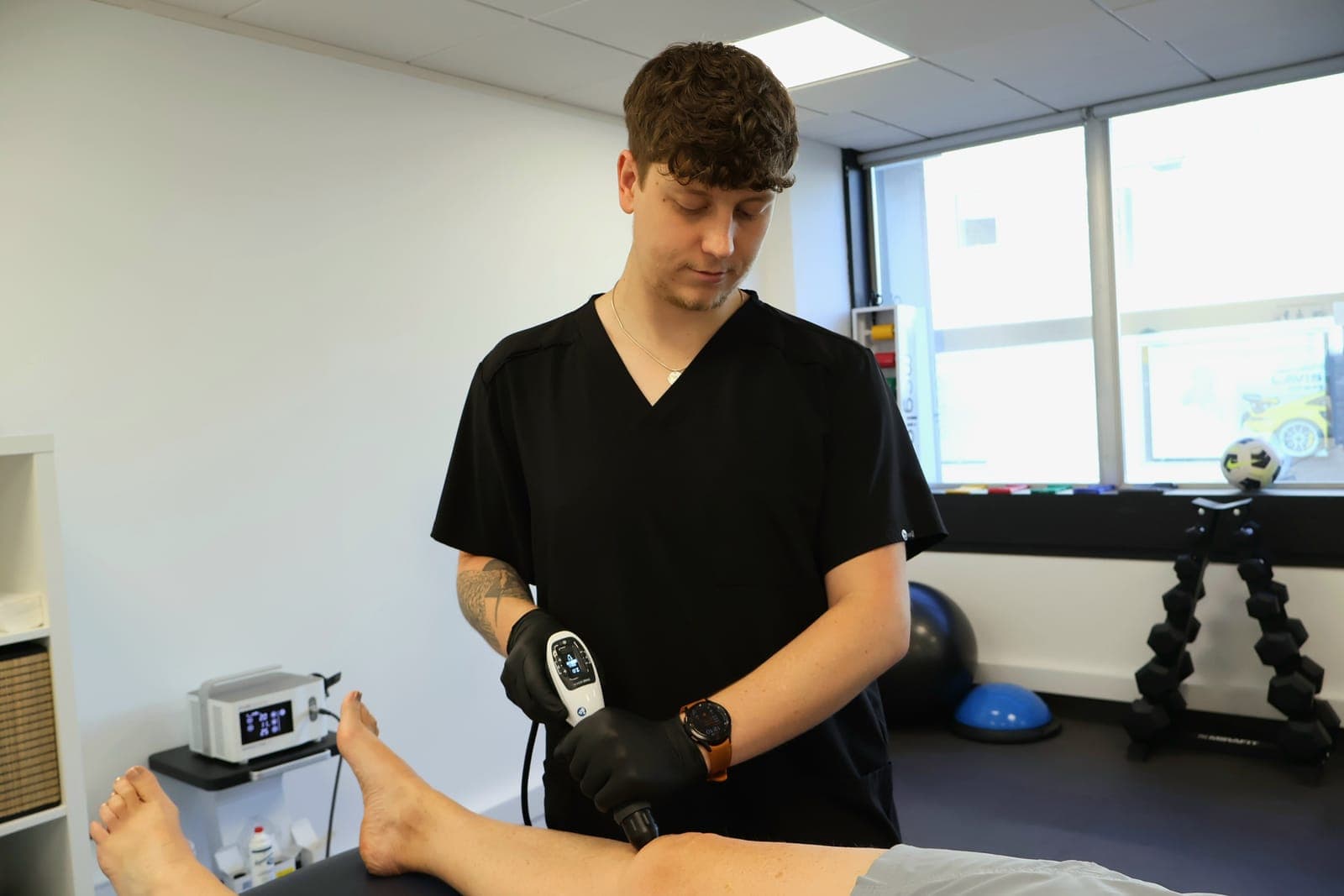
A non-invasive treatment for long-standing tendon and soft tissue pain that hasn't settled with standard care. At our Rose Lane clinic we use a Storz Medical radial shockwave device, always as part of a physiotherapy rehab plan rather than a quick fix.
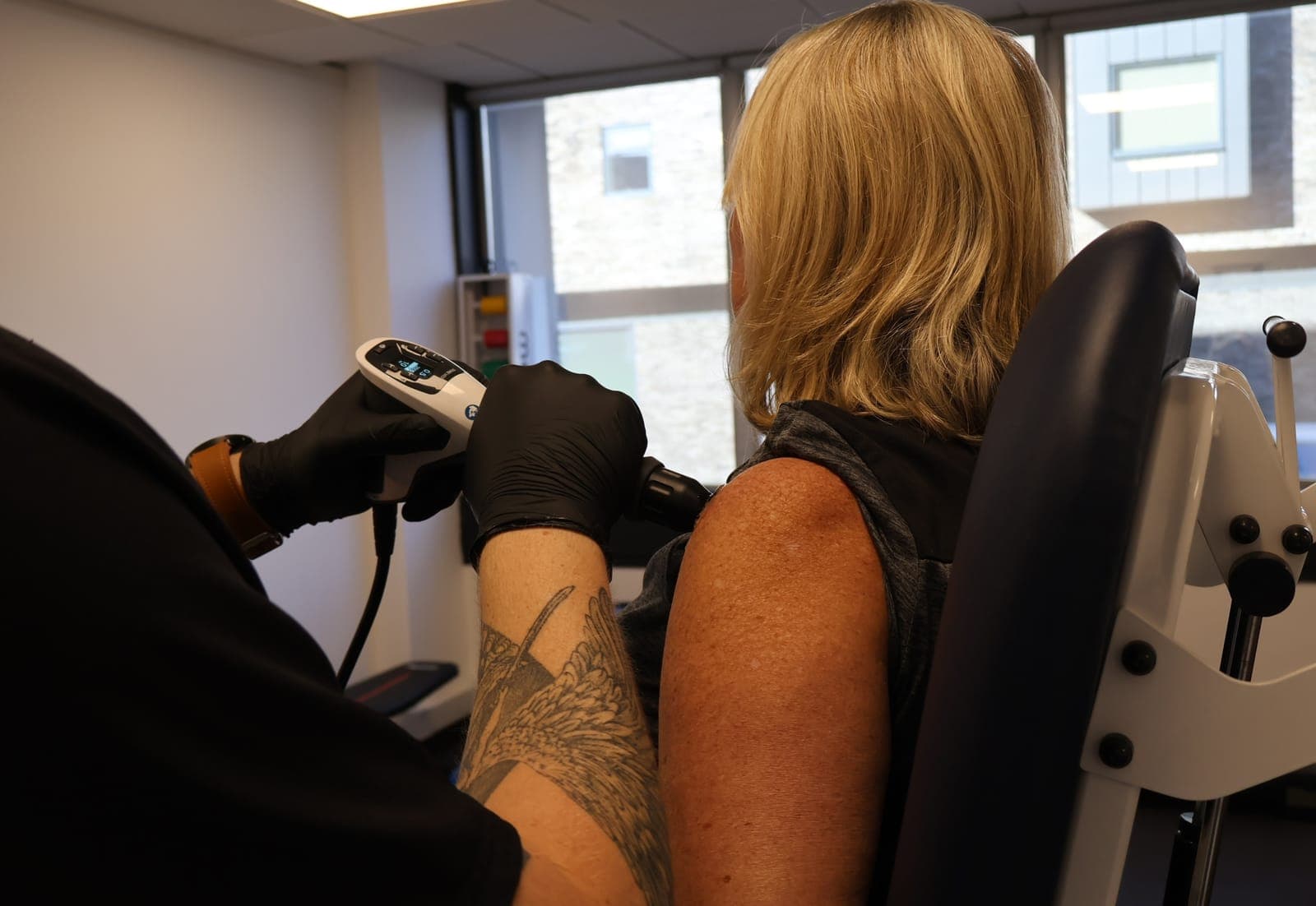
Extracorporeal shockwave therapy (ESWT) sends acoustic pressure waves through the skin into the injured tendon or muscle. It needs no needles, injections or anaesthetic, and each session takes a few minutes within your appointment.
It is mainly used for tendon problems that have lasted weeks, months or longer. Shockwave therapy has been researched for decades, and NICE (the National Institute for Health and Care Excellence) has published guidance on its use for conditions including plantar fasciitis, tennis elbow and Achilles tendinopathy.
It is not right for everyone, so every course starts with a full physiotherapy assessment. If shockwave isn't the best option for your problem, we will tell you and treat it another way.
When a tendon problem has lasted for months, the healing process can slow down or stop. The acoustic pulses increase blood flow and tissue repair activity in the treated area.
Long-standing tendon pain often involves over-sensitive nerve endings. Shockwave can reduce that sensitivity, which helps you get on with your rehab exercises.
In calcific tendinopathy, shockwave can help break down calcium deposits so the body can absorb them. It is also used on tight, tender areas of muscle.

Radial shockwave is best suited to long-standing tendon and soft tissue problems. These are the conditions we use it for most often.
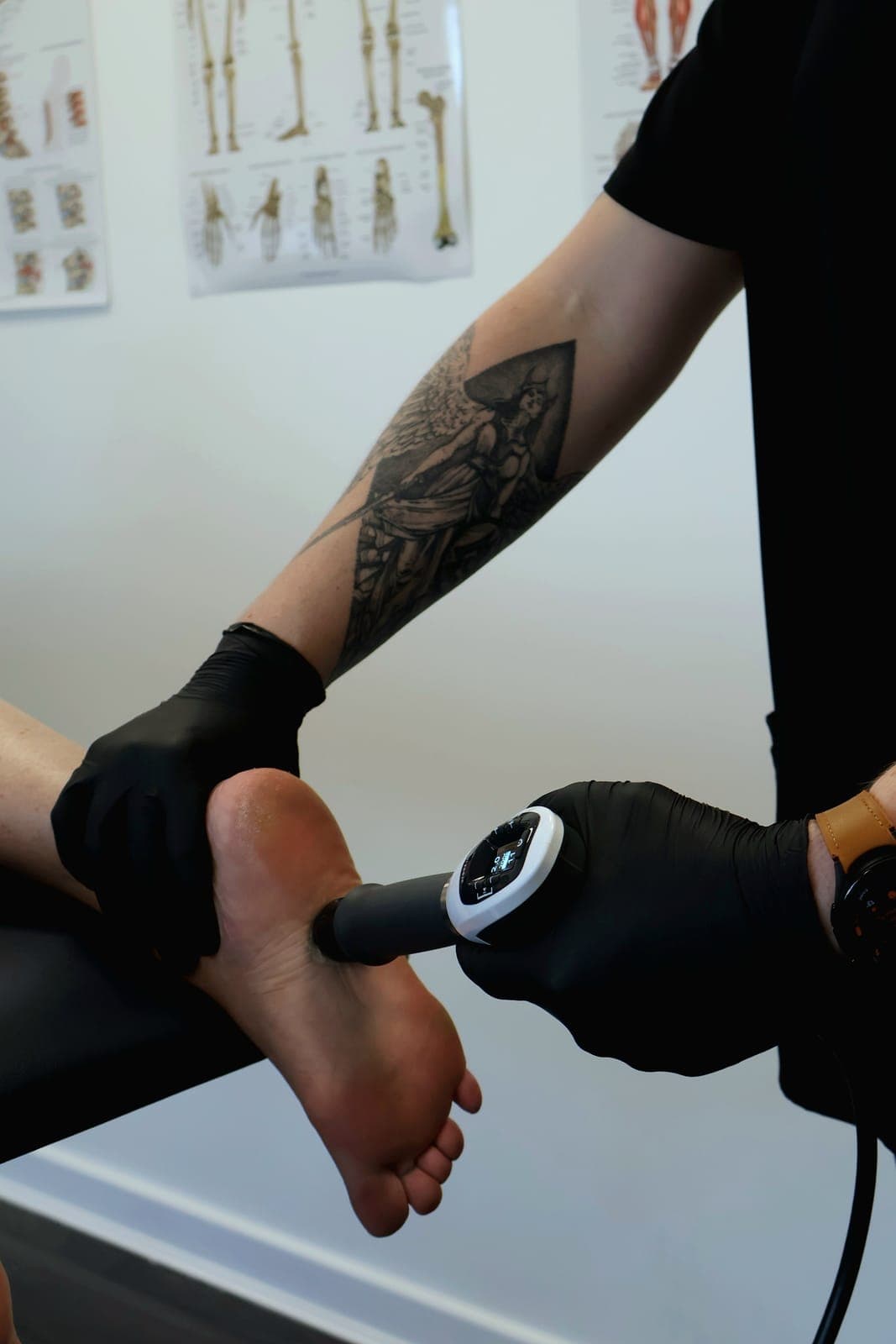
Sharp heel pain, often worst with your first steps in the morning.
An ache on the outside of the hip that makes lying on that side or walking painful.
Pain reaching overhead, or calcium build-up in the shoulder tendons.
Stiffness and pain in the tendon at the back of the ankle or where it joins the heel.
Pain just below the kneecap when jumping, squatting or using the stairs.
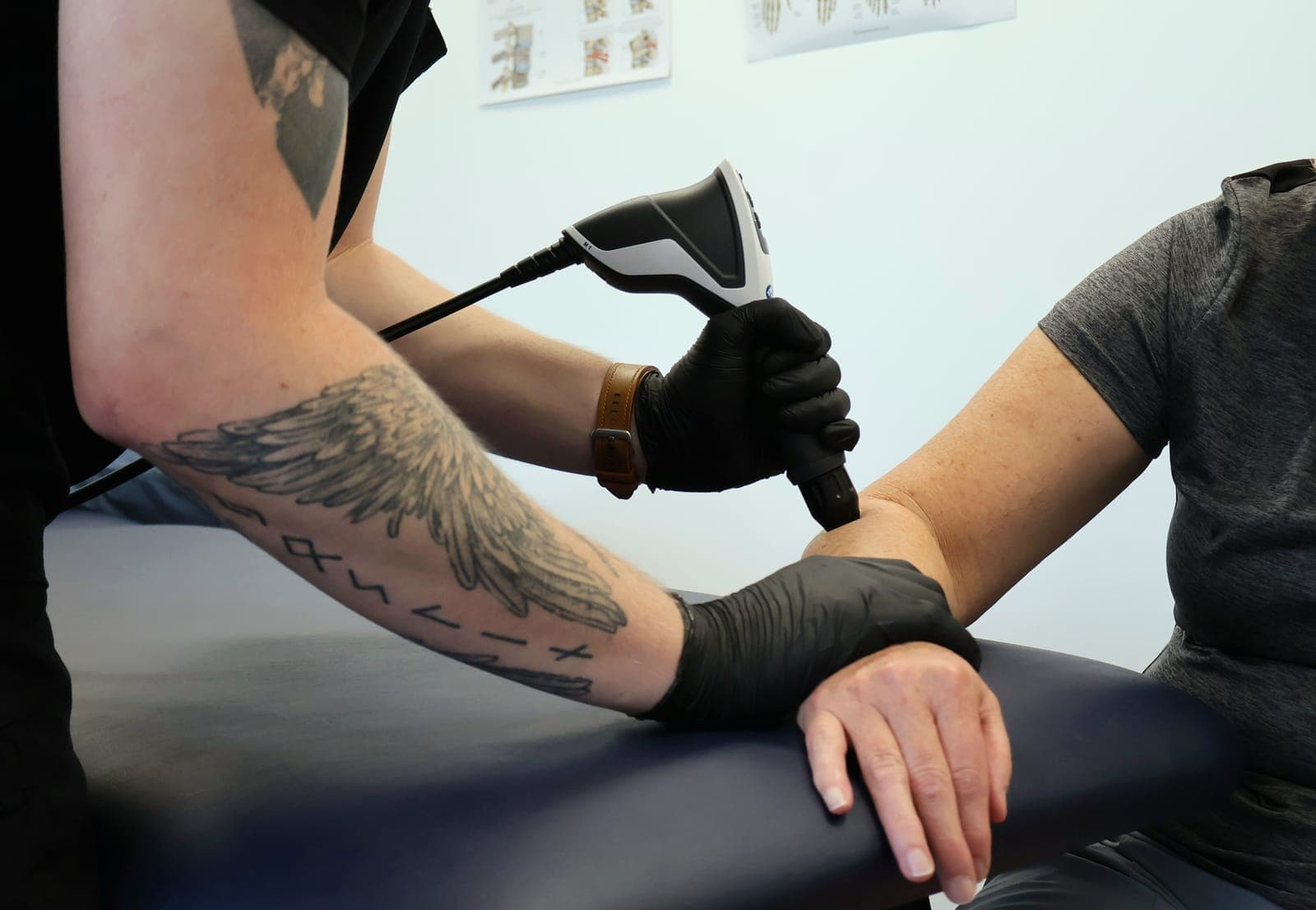
Pain on the outside of the elbow when gripping, lifting or typing.
Pain on the inside of the elbow when bending the wrist, twisting or carrying.
Persistent trigger points, or a muscle strain more than 72 hours after the injury.
Every course starts with the 60-minute initial assessment. We examine the problem, measure your strength with a handheld dynamometer and confirm whether shockwave is right for you.
If shockwave is suitable, we will recommend a single session or a 3 or 6-session package, and you can book your first treatment after the assessment.
Treatment is usually given once every 5 to 7 days for 3 to 6 weeks. Each session delivers around 2,000 to 3,000 pulses to the problem area.
Shockwave is never used on its own. Each session includes exercise progression, hands-on treatment and strength re-testing, so the tissue gets stronger as the pain settles.
Start with an initial assessment. If shockwave is right for you, you can then book single sessions or save with a package.
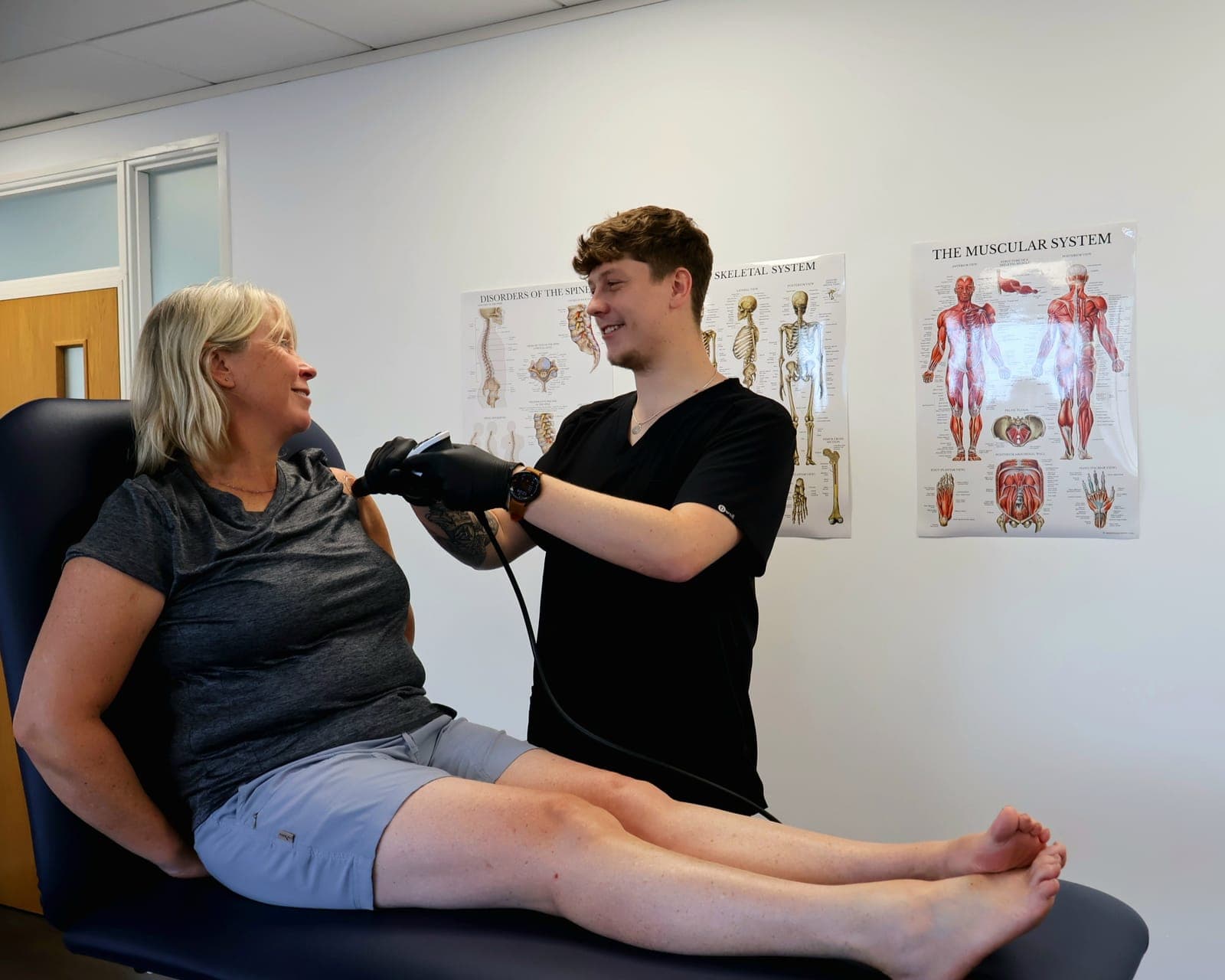
You feel a strong tapping or thumping sensation over the sore area. We start at a low intensity and build up gradually, so the treatment stays tolerable. Some people feel a little sore or red in the area for a day or two afterwards.
Most courses are 3 to 6 sessions, one every 5 to 7 days. Shorter courses suit more targeted or moderate problems, and longer courses suit long-standing or calcific conditions. We will recommend a number at your assessment.
No. Shockwave is only offered after an initial physiotherapy assessment (£90, 60 minutes), so we can confirm the diagnosis and check it is safe and suitable for you. If it is, you can then book single sessions or a package.
Some people notice a change after the first one or two sessions. Tendons take time to rebuild, though, which is why the treatment is given as a course and combined with strengthening exercises.
It is not used over a pregnancy, over a cancerous tumour, over growth plates in children, near the lungs, brain or spine, or in people with a severe bleeding disorder. We go through this with you at your assessment.
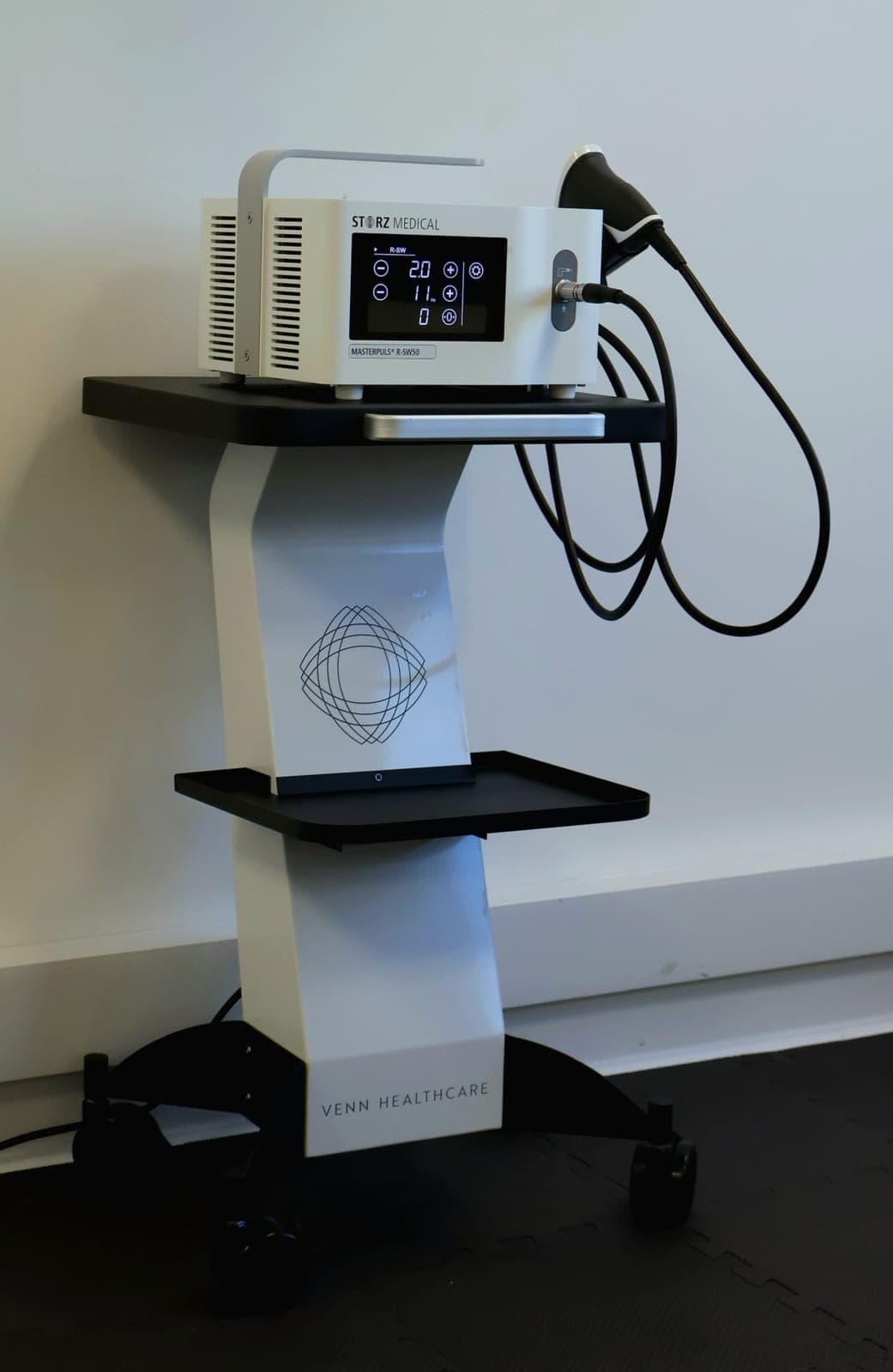
We use a Storz Medical radial shockwave (rESWT) device, which spreads the pulses over the treatment area. It is the type most often used for tendon and soft tissue problems.
The clinic is in The Union Building on Rose Lane, in Norwich city centre, with lift access and parking on site. How to get here from around Norwich.
Book online at any time, or call the clinic on 01603 555504.
info@jointinitiativephysio.co.uk