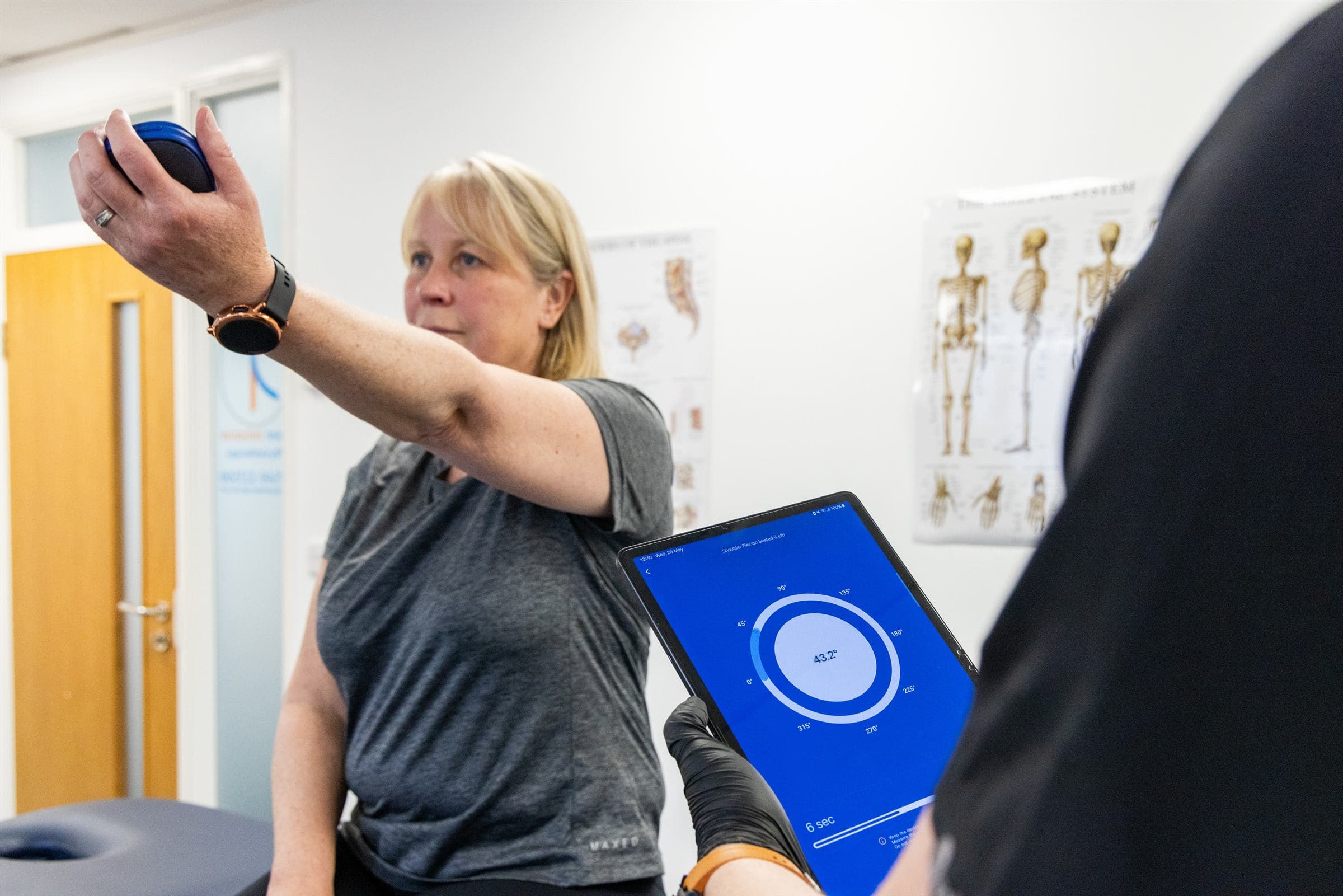
Shoulder movement being measured during a physiotherapy assessment at Joint Initiative Physiotherapy, Norwich
Shoulder conditions

Physio for Shoulder Pain & Frozen Shoulder in Norwich

Shoulder pain has a habit of interrupting ordinary things: reaching a high shelf, fastening a bra, putting on a coat or sleeping on your side. At Joint Initiative Physiotherapy in Norwich, Matt Joslin identifies whether you are dealing with a rotator cuff problem, a frozen shoulder or something else, because each one needs a different approach.

£55
30-minute follow-up
NR1
Norwich city centre
60 min
First appointment

Rotator cuff, frozen shoulder and other causes

The main shoulder problems seen in clinic

The shoulder is the most mobile joint in the body and relies on muscles and tendons, the rotator cuff, to keep it controlled. Pain can come from those tendons, from the joint capsule tightening, or from the small joint on top of the shoulder where the collarbone meets the shoulder blade.

  • Rotator cuff related pain, felt in the upper arm when lifting to the side or reaching overhead, often after a change in workload or training
  • Frozen shoulder, where the joint capsule becomes painful and then very stiff, more common between 40 and 60 and in people with diabetes
  • Pain on top of the shoulder from the acromioclavicular joint, often after a fall onto the shoulder or heavy pressing in the gym
  • A shoulder that feels loose or slips after a dislocation, common in contact sports and overhead sports such as tennis

Telling one shoulder problem from another

The key question is whether your shoulder is stiff, weak, painful or a mix of all three. Matt compares what you can lift yourself with how far the arm moves when he moves it for you, which is one of the clearest ways to separate a frozen shoulder from a tendon problem.

  • Raising the arm forwards and sideways to look for a painful arc, where pain appears in the middle of the movement and eases higher up
  • Turning the arm outwards with the elbow tucked in, a movement that is typically very limited in frozen shoulder
  • Pushing against resistance in different directions to load each rotator cuff tendon and check strength
  • Watching the shoulder blade and upper back as you move, and screening the neck, which can refer pain to the shoulder

Rehabilitation for shoulder pain

Rotator cuff problems generally respond to progressive loading, while a frozen shoulder needs pain management first and stretching later, once the painful phase is easing. Pushing hard into a frozen shoulder too early tends to aggravate it, so getting the stage right matters.

  • Graded strengthening for the rotator cuff and shoulder blade muscles using bands, weights or body weight
  • Mobility exercises and manual therapy for stiffness, matched to how irritable the shoulder currently is
  • Advice on sleeping positions, lifting at work and adjusting gym, swimming or racket sport sessions while you recover
  • If pain is severe or progress stalls, Matt can advise you to speak to your GP about other options, as the clinic does not provide scans or injections

Your shoulder plan, stage by stage

  1. 1

    Pin down the pattern

    Matt asks which movements hurt, whether night pain wakes you and how the problem began, whether gradually, after a fall or after a spell of heavier overhead use.

  2. 2

    Compare active and assisted movement

    Your shoulder is moved by you and then by Matt, and each tendon is tested against resistance, to establish whether stiffness or tendon pain is the main issue.

  3. 3

    Start at the right level

    You are given exercises pitched at what the shoulder tolerates now, such as supported movements or gentle holds, plus ways to make sleeping and dressing easier.

  4. 4

    Load up and reach overhead again

    Resistance is increased step by step until you can lift, carry, serve or swim, with follow-up sessions spaced according to how the shoulder responds.

Shoulder rehabilitation you can trust

  • Matt Joslin has treated athletes at tennis tournaments and plays tennis himself, so he understands the demands overhead sport places on a shoulder.
  • He is a chartered physiotherapist, MCSP and HCPC registered, with a background that includes orthopaedics in both public and private healthcare.
  • Your first visit includes a full history, a physical examination, initial treatment and a tailored rehab plan, all in one 60-minute appointment.

Treatment is delivered by an HCPC registered chartered physiotherapist. Meet Matt Joslin, BSc (Hons) MCSP.

Prices and where to find us

  • Initial Physiotherapy Assessment60 minutes£90
  • Follow-up Physiotherapy Session30 minutes£55

The Union Building, 51-59 Rose Lane, Norwich, NR1 1BY

Monday, Wednesday and Friday 9am to 5pm. Tuesday and Thursday 11am to 7pm.

See all prices and book

Common questions

How long does a frozen shoulder take to get better?

Frozen shoulder is slow. It commonly takes many months and can take two years or more to resolve fully, moving through a painful phase, a stiff phase and a gradual recovery. Physiotherapy cannot shorten that with certainty, but it aims to manage pain, keep the movement you have and restore function as the shoulder loosens.

Can a rotator cuff problem heal without surgery?

Often, yes. Many rotator cuff problems, including some tears, are managed with a structured exercise programme and never need an operation. Progress usually takes several weeks to a few months of consistent strengthening. If your shoulder is not improving as expected, or a significant tear after an injury is suspected, Matt will recommend seeing your GP about further investigation.

Should I stop swimming or the gym while my shoulder hurts?

Usually you can keep going with changes, not a complete stop. Reducing overhead volume, lowering weights or switching stroke often keeps you training while the shoulder settles. Mild discomfort that eases within a day is generally acceptable. Matt will go through your sessions with you and say what to keep, what to adapt and what to pause.

How do I know if I have frozen shoulder or a rotator cuff issue?

The main clue is stiffness. With a frozen shoulder the arm will not move fully even when someone else lifts it, and turning it outwards is especially restricted. With a rotator cuff problem the movement is usually there but painful or weak. A physical examination is normally enough to tell them apart without a scan.

Book your appointment in Norwich city centre

Choose a time online, or call the clinic if you would like to talk it through first.