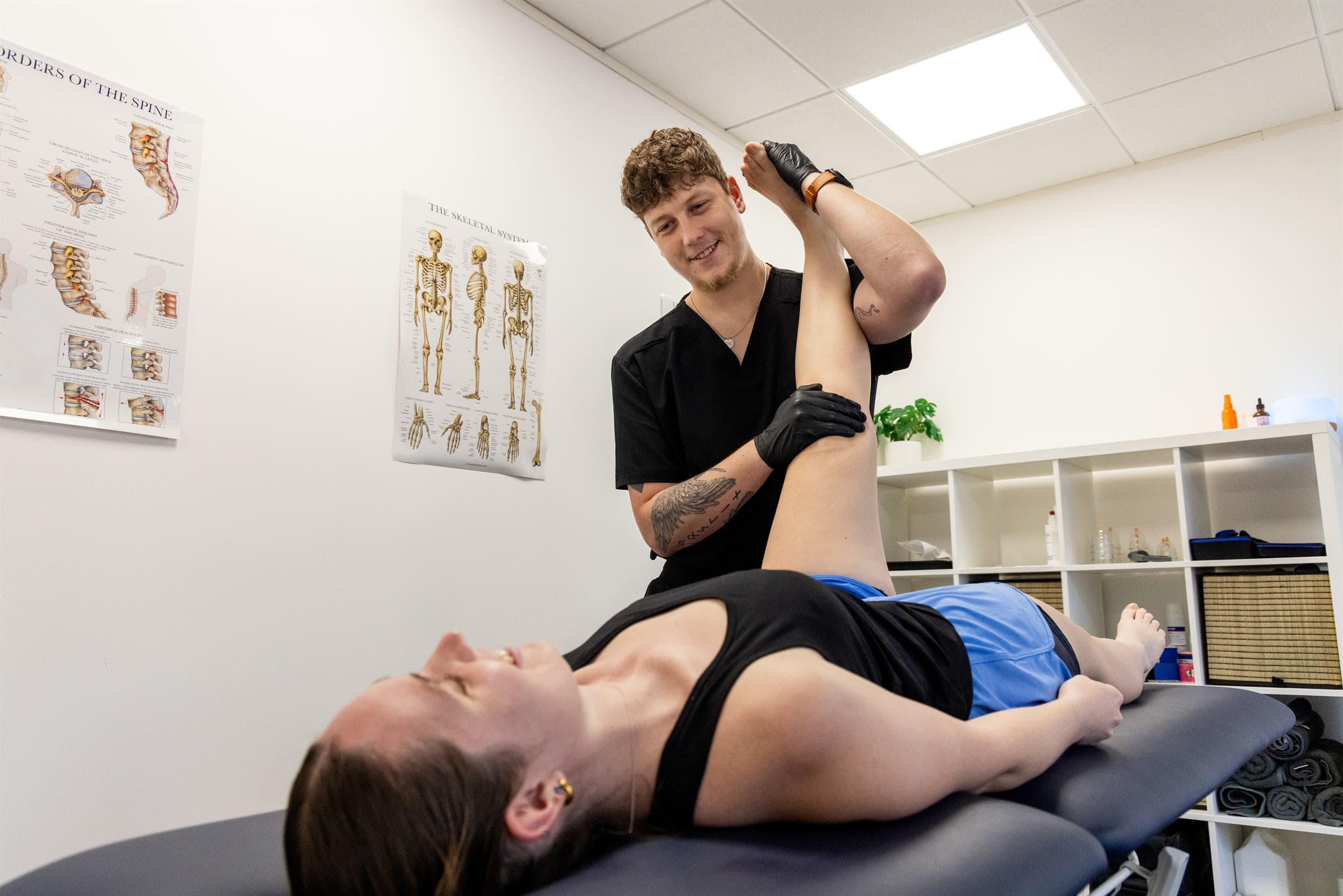
Physiotherapist stretching a patient's leg on a treatment couch at the Joint Initiative clinic in Norwich
Hip and groin

Physio for Hip Pain in Norwich

Hip pain can sit deep in the groin, on the outside of the hip or in the buttock, and where you feel it says a lot about the cause. Matt Joslin at Joint Initiative Physiotherapy, Rose Lane, examines how your hip moves and takes load, then builds a strengthening plan around walking, stairs, sport or whatever you most want to get back to.

Lift
Access at The Union Building
£90
60-minute assessment
No referral
Book directly online

Where your hip hurts and what it may mean

Three common sources of hip pain

Pain felt in the groin often points to the hip joint itself, while pain over the bony point on the outside of the hip more often comes from the gluteal tendons. In people who play sport, the muscles of the inner thigh are a frequent culprit.

  • Hip osteoarthritis, typically groin or thigh pain with morning stiffness that eases within half an hour, and difficulty with socks and shoes
  • Gluteal tendinopathy, an ache on the outer hip that is worse lying on that side, climbing stairs or standing with your weight on one leg
  • Groin strains affecting the adductor muscles, common in football and other sports involving sprinting, kicking and quick changes of direction
  • Pain referred from the lower back, which can mimic a hip problem and is checked as part of the assessment

How a hip is examined

Matt watches you walk and then tests the hip lying down, looking at how far the joint rotates and which positions reproduce your pain. Wear or bring shorts, and bring your trainers if the problem affects walking or running.

  • Rotating the hip inwards and outwards with the knee bent, as loss of inward rotation is a typical feature of an arthritic hip
  • Standing on one leg for up to thirty seconds to see whether outer hip pain appears, a simple test for the gluteal tendons
  • Squeezing your knees together against resistance to load the adductor muscles when a groin strain is suspected
  • Measuring the strength of the muscles around the hip and comparing the two sides

Exercise-based treatment for hips

For hip osteoarthritis, UK guidance places therapeutic exercise at the centre of treatment, alongside staying active and managing body weight where relevant. Tendon and groin problems respond to gradually increasing load, not complete rest.

  • Progressive strengthening for the gluteal and thigh muscles, adjusted to your starting point and any equipment you have at home
  • For outer hip pain, changes that reduce compression on the tendon, such as not crossing your legs and using a pillow between the knees at night
  • For groin strains, staged adductor strengthening followed by running, change of direction and kicking before a return to matches
  • If your hip is very stiff and limiting daily life despite good rehabilitation, Matt will advise a GP review to discuss further options

Getting a sore hip moving and stronger

  1. 1

    Locate the pain

    You show Matt exactly where the hip hurts and describe what brings it on, from getting out of the car to walking on Mousehold Heath or playing five-a-side.

  2. 2

    Walk, balance and rotate

    Your walking pattern, single-leg balance, hip rotation and muscle strength are tested to separate joint, tendon, muscle and lower back causes.

  3. 3

    Adjust the daily load

    Small changes to sitting, sleeping position, step count or training are agreed so the hip is working without being repeatedly aggravated.

  4. 4

    Strengthen in stages

    Exercises move from simple holds and bridges to standing, stair and sport-specific work, reviewed at follow-up sessions as your hip tolerates more.

A physiotherapist who knows hips and groins

  • Matt Joslin has worked with a professional football team, where groin and hip injuries are part of everyday rehabilitation.
  • As an HCPC registered chartered physiotherapist he follows mainstream UK guidance, which means exercise comes first for arthritic hips.
  • The Union Building has a lift and parking on site, which helps when walking far or managing stairs is painful.

Treatment is delivered by an HCPC registered chartered physiotherapist. Meet Matt Joslin, BSc (Hons) MCSP.

Prices and where to find us

  • Initial Physiotherapy Assessment60 minutes£90
  • Follow-up Physiotherapy Session30 minutes£55

The Union Building, 51-59 Rose Lane, Norwich, NR1 1BY

Monday, Wednesday and Friday 9am to 5pm. Tuesday and Thursday 11am to 7pm.

See all prices and book

Common questions

Is exercise safe if I have hip osteoarthritis?

Yes, exercise is safe and is the main recommended treatment for hip osteoarthritis in the UK. Strengthening and regular activity do not wear the joint out further, and many people find pain and function improve. Some discomfort during exercise is normal. Matt sets the starting level and progresses it so your hip is challenged without being flared up.

Why does the outside of my hip hurt when I lie on it at night?

This is a typical sign of gluteal tendinopathy. Lying on the sore side presses on the tendons, and lying on the other side lets the top leg drop across and stretch them. A pillow between your knees often helps. Physiotherapy then uses graded strengthening to improve what the tendons can tolerate during the day.

How soon can I play football again after a groin strain?

It depends on the severity. Mild adductor strains may settle in a few weeks, while more significant ones can take two to three months. Returning is based on what you can do, not the calendar: pain-free squeezing strength, sprinting, cutting and kicking in training first. Going back too early is a common reason groin strains recur.

How do I know if my hip pain is really coming from my back?

It is hard to tell on your own, which is why both areas are examined. Pain from the hip joint usually sits in the groin and is brought on by rotating the hip. Pain referred from the back tends to sit in the buttock and change with spinal movement. Matt tests each to find the source.

Book your appointment in Norwich city centre

Choose a time online, or call the clinic if you would like to talk it through first.