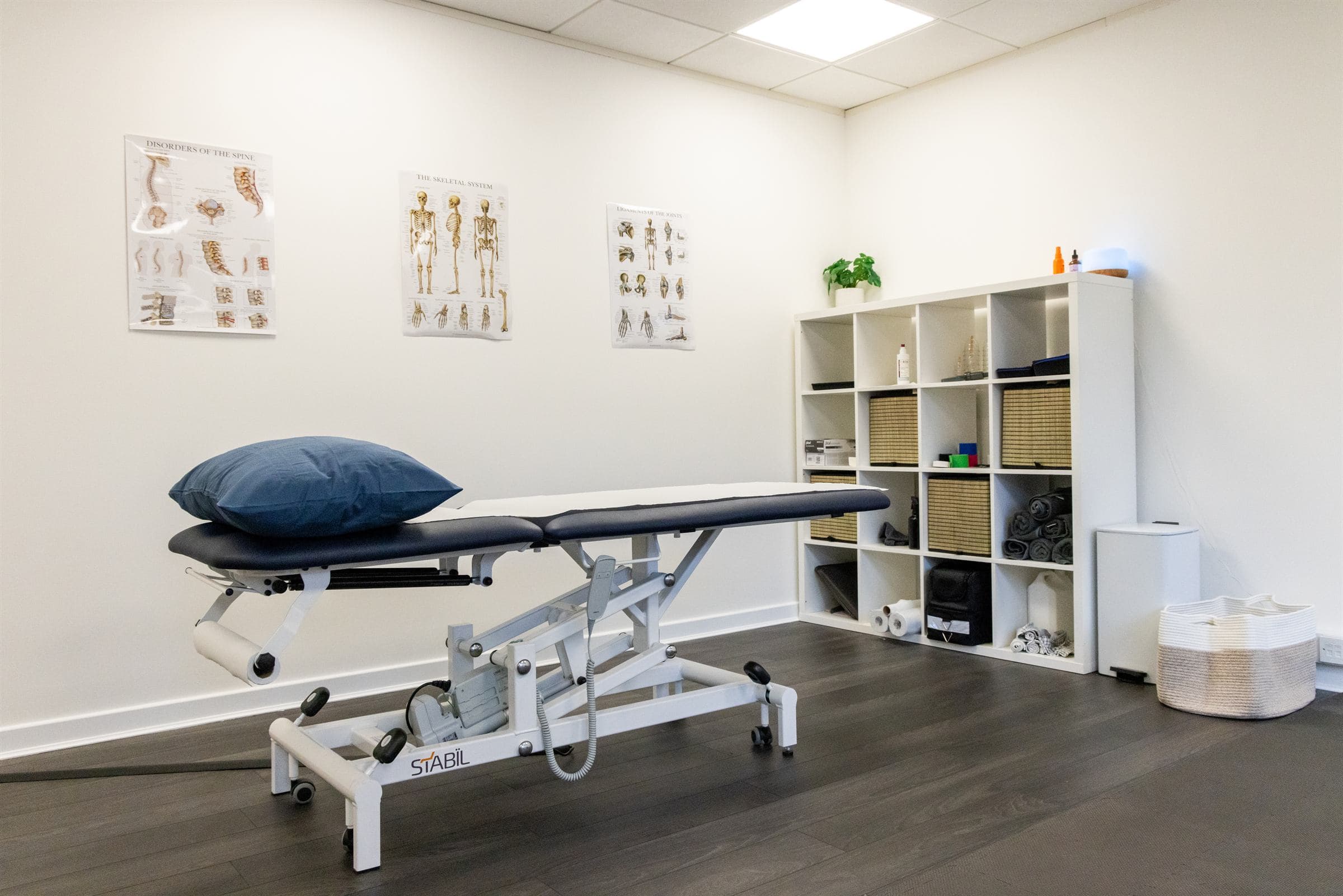
Treatment room at Joint Initiative Physiotherapy on Rose Lane, Norwich
Achilles and calf

Physio for Achilles Tendonitis & Tendon Pain in Norwich

Achilles tendonitis, now more often called Achilles tendinopathy, is pain and stiffness in the tendon that joins your calf muscles to your heel bone. At Joint Initiative Physiotherapy in Norwich, Matt Joslin works out which part of the tendon is affected, because that changes the exercises you should be doing. Treatment centres on progressive calf loading and a staged return to running or sport.

60 min
First appointment
30 min
Follow-up sessions
7pm
Open until, Tue and Thu

Achilles tendinopathy: types, assessment and rehab

Mid-portion or insertional: two kinds of Achilles pain

Achilles tendinopathy usually develops gradually when the tendon is worked harder or more often than it has adapted to. Mid-portion pain sits in the body of the tendon a few centimetres above the heel, sometimes with a visible thickening. Insertional pain is felt lower down, where the tendon attaches to the back of the heel bone, and it is often irritated by pressure from shoes and by deep ankle bending.

  • Stiffness and soreness in the tendon on waking that eases after a few minutes of walking
  • Pain that warms up during a run then returns, often worse, later that day or the next morning
  • Commonly follows extra mileage, hill or speed sessions, a change of footwear or a return after time off
  • Tenderness when you squeeze the tendon, or at the back of the heel with insertional pain

What the Achilles assessment looks at

Matt begins with your training and activity history, recent changes and any medication, since certain antibiotics are linked with tendon problems. He then examines the tendon, compares calf strength side to side and, if the tendon is calm enough, tests how it copes with hopping. A squeeze test of the calf is used to check the tendon is intact.

  • Pinpointing whether pain is in the mid-portion or at the heel attachment
  • Counting single-leg heel raises on each side to measure calf capacity
  • Ankle flexibility measured with the knee straight and bent
  • Hopping, walking and footwear checks, so bring your trainers

Rehab: progressive calf loading

Tendons respond to load that is heavy enough and increased gradually, so strengthening is the core of treatment and rest alone is rarely enough. The starting point depends on how irritable the tendon is. For insertional pain the early exercises are done on flat ground, without dropping the heel below a step, to avoid compressing the tendon against the heel bone.

  • Sustained calf holds to begin with if the tendon is very sore
  • Slow heel raises on two legs, then one, with weight added over time
  • Bent-knee raises to target the deeper soleus muscle
  • Hopping and skipping drills before a graded return to running

Stages of Achilles rehab

  1. 1

    Identify the type and the trigger

    The initial assessment establishes whether your pain is mid-portion or insertional, how irritable it is, and which change in training, footwear or activity set it off.

  2. 2

    Settle and start loading

    You begin calf exercises at a level the tendon tolerates, with short-term adjustments such as fewer hills or less speed work. Mild discomfort during exercise is usually acceptable. Pain that lingers into the next day means easing back.

  3. 3

    Build heavy calf strength

    Over the following weeks, load is added to straight-knee and bent-knee heel raises. Matt uses your morning stiffness and next-day response to judge when to progress.

  4. 4

    Restore spring and return to running

    Once strength is closer to your other leg, hopping and jumping drills are introduced, followed by a walk-run programme that builds towards your normal training.

Experience with tendon and sports injuries

  • Matt has delivered on-field care and rehabilitation with a professional football team and plays football himself.
  • Sports screening, movement analysis and taping are available alongside exercise-based rehab.
  • The clinic is open until 7pm on Tuesdays and Thursdays, and you can book online without a GP referral.

Treatment is delivered by an HCPC registered chartered physiotherapist. Meet Matt Joslin, BSc (Hons) MCSP.

Prices and where to find us

  • Initial Physiotherapy Assessment60 minutes£90
  • Follow-up Physiotherapy Session30 minutes£55

The Union Building, 51-59 Rose Lane, Norwich, NR1 1BY

Monday, Wednesday and Friday 9am to 5pm. Tuesday and Thursday 11am to 7pm.

See all prices and book

Common questions

What is the difference between Achilles tendonitis and Achilles tendinopathy?

They describe the same problem. Tendonitis is the older, widely used term and suggests inflammation, while tendinopathy is the name clinicians now prefer because the main issue is thought to be a change in how the tendon tolerates load. Whichever word you use, the treatment is similar: manage the load and strengthen the calf progressively.

Should I stretch my Achilles if it hurts?

Not necessarily. If your pain is at the heel attachment, strong calf stretches that push the ankle into deep bending can aggravate it, so they are usually avoided early on. For mid-portion pain, gentle stretching is less of a problem but strengthening matters more. Matt will tell you which applies after examining the tendon.

How long does Achilles tendinopathy rehab usually take?

Usually months, not weeks. Many people are advised to expect around three months or more of consistent calf loading, and long-standing or insertional problems can take longer. Progress is rarely a straight line, and flare-ups are common. Matt will set milestones based on strength and function instead of a fixed date.

Can I run with Achilles tendon pain?

Sometimes, with limits. If pain during a run stays mild, does not build as you go and the tendon is no stiffer than usual the next morning, some running can often continue on flatter routes at an easier pace. If it is worsening, a spell of reduced running alongside calf strengthening is usually advised.

Book your appointment in Norwich city centre

Choose a time online, or call the clinic if you would like to talk it through first.