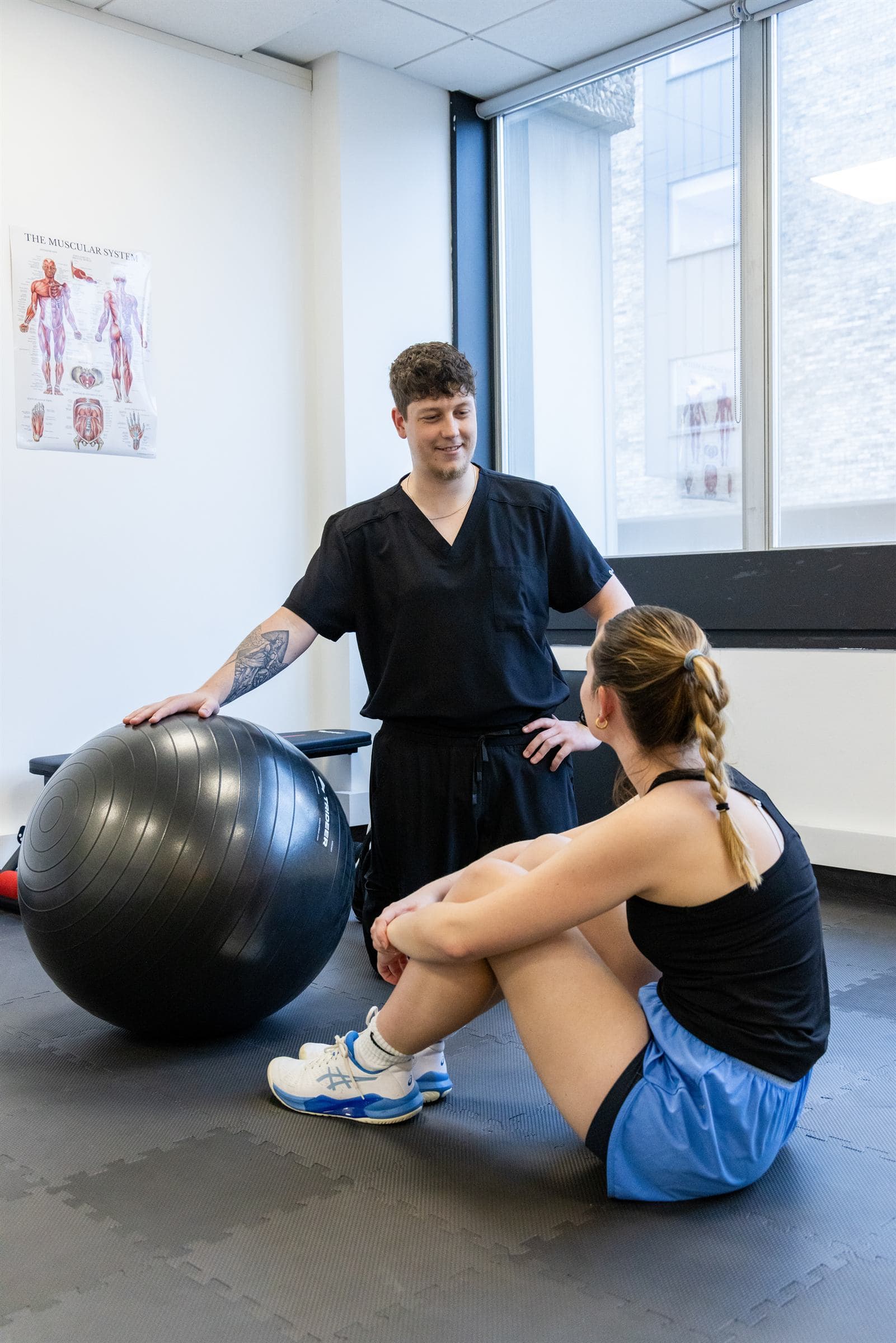
Physiotherapist talking with a patient in the rehab area at Joint Initiative Physiotherapy in Norwich
Elbow and forearm pain

Physio for Tennis Elbow in Norwich

Tennis elbow is pain on the outer side of the elbow that flares when you grip, lift or twist, and most people who get it have never picked up a racket. At Joint Initiative Physiotherapy on Rose Lane, Matt Joslin assesses what is overloading the tendon and builds a loading plan to settle it and strengthen the forearm. Golfer's elbow, the same kind of problem on the inner side, is treated here too.

60 min
Initial assessment
£55
30 minute follow-up
MCSP
Chartered physiotherapist

Understanding and treating tennis elbow

What tennis elbow actually is

Tennis elbow, also called lateral elbow tendinopathy, affects the tendon that anchors your wrist and finger extensor muscles to the bony point on the outside of the elbow. It tends to build when that tendon is asked to do more gripping or wrist work than it is used to. Golfer's elbow is the mirror image on the inner elbow, where the wrist flexor muscles attach.

  • Pain or tenderness over the outer elbow, sometimes spreading down the forearm
  • Sore when lifting a kettle, turning a door handle, shaking hands or using a screwdriver
  • Often linked to repetitive manual work, DIY, gardening, racket sports or long spells of mouse and keyboard use
  • Golfer's elbow hurts on the inner side instead, usually with gripping, pulling or carrying

How your elbow is assessed

Your first appointment starts with how the pain began, what your hands do all day and which tasks set it off. Matt then tests the forearm muscles against resistance, checks your grip and looks at the wrist, shoulder and neck, because pain around the elbow can be referred from elsewhere or involve an irritated nerve. If the picture does not fit a tendon problem, he will advise you to see your GP or seek further investigation.

  • Resisted wrist and finger tests to see which movements reproduce your pain
  • Grip comparison between your sore arm and your other arm
  • Neck, shoulder and nerve checks to rule out pain referred into the elbow
  • A look at your desk setup, tools, racket grip or lifting technique where relevant

Treatment: load management and progressive strengthening

Complete rest rarely solves tennis elbow, and pushing through sharp pain tends to keep it going. The aim is to trim the aggravating load for a while, then steadily build up what the tendon can tolerate with forearm exercises. Hands-on treatment and taping may help ease symptoms in the short term while you build strength.

  • Changes to how you grip and lift, such as carrying with your palm facing up
  • Desk and mouse adjustments, with short breaks from sustained gripping
  • Wrist extensor exercises that start with gentle holds and progress to slow weighted lifts
  • Soft tissue work, joint mobilisation or taping where they are likely to help

Your tennis elbow plan, step by step

  1. 1

    Pin down the aggravating tasks

    In a 60 minute initial assessment Matt takes a full history, tests the elbow, wrist and neck, and identifies the gripping and lifting tasks that are keeping the tendon irritated.

  2. 2

    Calm the tendon

    You leave with specific changes to work, sport and daily tasks, plus a starting exercise pitched at a level your elbow can tolerate. Initial treatment is included in the first session.

  3. 3

    Build forearm strength

    At 30 minute follow-ups the exercises are progressed in resistance and speed, moving from static holds to weighted wrist work and grip strengthening as symptoms allow.

  4. 4

    Return to racket, tools or keyboard

    Matt plans a gradual return to the activities that matter to you, with guidance on technique, equipment and how to respond if the elbow flares.

Why see Matt about elbow tendon pain

  • Your assessment and treatment are carried out by Matt Joslin, a chartered physiotherapist (BSc Hons, MCSP) registered with the HCPC.
  • He has treated athletes at tennis tournaments and plays tennis himself, so racket grip, technique and playing load are familiar ground.
  • The clinic is in The Union Building on Rose Lane, Norwich city centre, with lift access and parking on site, convenient if you work in a city-centre office.

Treatment is delivered by an HCPC registered chartered physiotherapist. Meet Matt Joslin, BSc (Hons) MCSP.

Prices and where to find us

  • Initial Physiotherapy Assessment60 minutes£90
  • Follow-up Physiotherapy Session30 minutes£55

The Union Building, 51-59 Rose Lane, Norwich, NR1 1BY

Monday, Wednesday and Friday 9am to 5pm. Tuesday and Thursday 11am to 7pm.

See all prices and book

Common questions

How long does tennis elbow take to get better with physiotherapy?

It varies, and tennis elbow is often slow. Many people notice day-to-day tasks getting easier over several weeks of consistent loading exercises, but full recovery can take several months and sometimes longer. Matt will set realistic expectations at your assessment, review progress at follow-ups and adjust the plan if your elbow is not responding as expected.

Should I rest my tennis elbow or keep using the arm?

Keep using it, within limits. Total rest tends to leave the tendon less able to cope when you return to normal tasks, while repeatedly provoking sharp pain can prolong the problem. The usual approach is to reduce or modify the most aggravating gripping and lifting for a period, then rebuild with graded strengthening.

Can desk work and using a mouse cause tennis elbow?

It can contribute. Hours of mouse and keyboard use keep the wrist extensor muscles working at a low level without a break, which may irritate the tendon, particularly when combined with gym work, DIY or racket sport. Matt can suggest changes to mouse position, forearm support and break patterns alongside your exercises.

Do you treat golfer's elbow as well as tennis elbow?

Yes. Golfer's elbow affects the tendon on the inner side of the elbow and is managed on similar principles: identify what is overloading it, adjust that load and progressively strengthen the wrist flexor and forearm muscles. The assessment also checks the nerve that runs past the inner elbow, since it can produce similar symptoms.

Book your appointment in Norwich city centre

Choose a time online, or call the clinic if you would like to talk it through first.