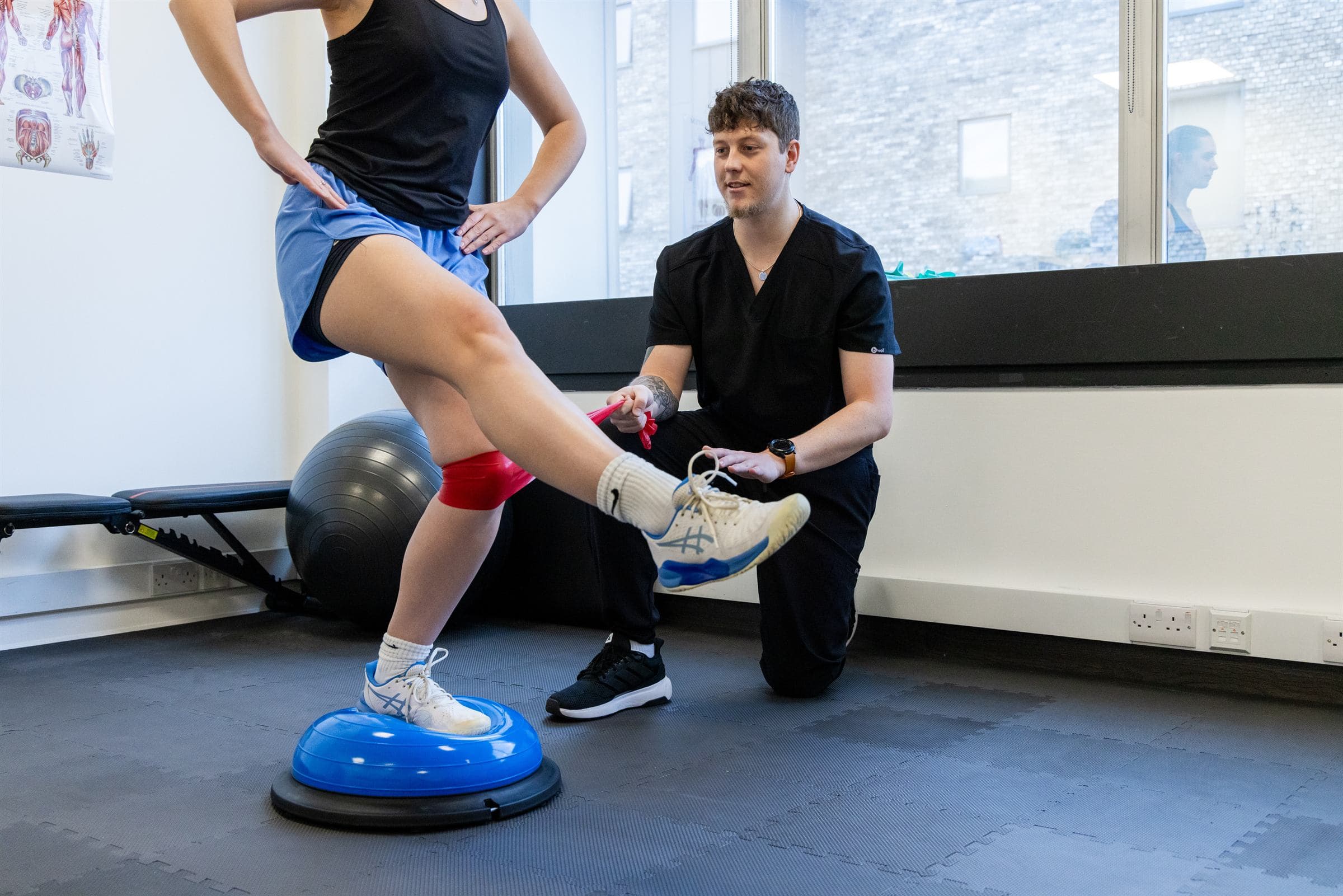
Patient balancing on one leg with a physiotherapist watching at the Joint Initiative clinic in Norwich
Heel and foot pain

Physio for Plantar Fasciitis & Heel Pain in Norwich

Plantar fasciitis is one of the most common causes of pain under the heel, and it is known for making the first few steps out of bed the worst of the day. Matt Joslin, chartered physiotherapist at Joint Initiative Physiotherapy in Norwich city centre, assesses your foot, calf and footwear and sets out a plan built around loading, stretching and practical changes. Bring the shoes you wear most.

£90
Initial assessment
NR1
Norwich city centre
HCPC
Registered physiotherapist

Plantar fasciitis explained, from cause to treatment

What plantar fasciitis feels like and why it starts

The plantar fascia is a thick band of tissue running from the heel bone to the base of the toes, supporting the arch each time you step. When it is loaded more than it can currently tolerate, the attachment at the heel can become painful. It affects runners and walkers, and just as readily people who spend long days standing.

  • Sharp or aching pain under the heel, often towards the inner side
  • Worst with the first steps in the morning or after sitting, easing as you get moving
  • Tends to return after long periods on your feet or towards the end of the day
  • Often follows a sudden rise in walking, running or standing, a switch to flatter or worn shoes, or tight calves

Checking the foot, ankle and calf

Not all heel pain is plantar fasciitis, so the assessment is about confirming the pattern and ruling out other sources. Matt presses along the heel and arch, checks ankle and big toe movement, tests calf strength and watches you walk. He will also ask about your work and weekly activity, and look at the wear on your shoes.

  • Locating exactly where under the heel the tenderness sits
  • Measuring how far the ankle bends and how well the big toe lifts
  • Single-leg heel raises to gauge calf strength and endurance
  • Walking and standing assessment, plus a look at your everyday and sports footwear

Treatment: calf loading, stretching, taping and footwear

Treatment aims to ease the strain on the heel in the short term and make the foot and calf stronger over the longer term. Most of the benefit comes from what you do between appointments, so the programme is kept short enough to fit into a normal day. If your symptoms suggest a nerve problem, a bone injury or an inflammatory condition, Matt will advise you to see your GP.

  • Heel raise exercises, progressed slowly in load, to strengthen the calf and plantar fascia
  • Stretches for the calf and the sole of the foot, often done before those first morning steps
  • Sports taping to support the arch, which may give short-term relief
  • Advice on cushioned, supportive footwear and on avoiding barefoot walking on hard floors while it is sore

How heel pain treatment progresses

  1. 1

    Assess the foot and your footwear

    Matt takes a history of your heel pain, examines the foot, ankle and calf, and looks at the shoes you bring. Pack your trainers and any work shoes you spend long hours in.

  2. 2

    Take the sting out of first steps

    You start with stretches, simple footwear changes and, where useful, taping, aimed at making mornings and long days on your feet more manageable.

  3. 3

    Load the calf and arch

    Follow-up sessions add and progress heel raise work so the tissue under the heel gradually copes with more. Exercises are adjusted according to how the heel feels over the following day.

  4. 4

    Get back to walking, work and sport

    Walking distance, standing time or running are built back in stages, with a plan for what to do if the heel pain starts to creep back.

Heel pain care on Rose Lane

  • A full hour is set aside for your initial assessment, which covers history, physical examination, first treatment and a tailored rehab plan.
  • Matt Joslin holds a BSc (Hons) in Physiotherapy, is a member of the Chartered Society of Physiotherapy and is registered with the HCPC.
  • Kinesio and sports taping and movement analysis are part of what the clinic offers, alongside a personalised exercise programme.

Treatment is delivered by an HCPC registered chartered physiotherapist. Meet Matt Joslin, BSc (Hons) MCSP.

Prices and where to find us

  • Initial Physiotherapy Assessment60 minutes£90
  • Follow-up Physiotherapy Session30 minutes£55

The Union Building, 51-59 Rose Lane, Norwich, NR1 1BY

Monday, Wednesday and Friday 9am to 5pm. Tuesday and Thursday 11am to 7pm.

See all prices and book

Common questions

How long does plantar fasciitis last, and does physio speed it up?

It often lasts several months, and for some people longer. Physiotherapy cannot promise a timescale, but stretching, progressive loading and sensible footwear changes are the mainstream approach and may help symptoms settle sooner than waiting alone. Matt will give you an honest view after assessing you and review progress at each follow-up.

Why is plantar fasciitis pain worse first thing in the morning?

Because the tissue stiffens while it is unloaded overnight. The plantar fascia and calf rest in a shortened position while you sleep, so the first steps suddenly stretch a sensitive attachment at the heel. The same thing happens after sitting for a while. Gentle foot and calf stretches before you stand can make those first steps easier.

What shoes should I wear with plantar fasciitis?

Generally, shoes with a cushioned heel and good arch support, such as a supportive trainer. Very flat, thin-soled or worn-out shoes and walking barefoot on hard floors tend to aggravate the heel. Bring the pairs you wear most to your appointment so Matt can give advice specific to your feet, your work and your activity.

Can I keep running or walking with plantar fasciitis?

Often yes, at a reduced level. Many people can continue if heel pain stays mild during activity and has settled by the next morning. If it is worsening, you may need to cut distance, choose softer surfaces or swap some sessions for cycling or swimming for a while. Matt will set limits based on how your heel responds.

Book your appointment in Norwich city centre

Choose a time online, or call the clinic if you would like to talk it through first.