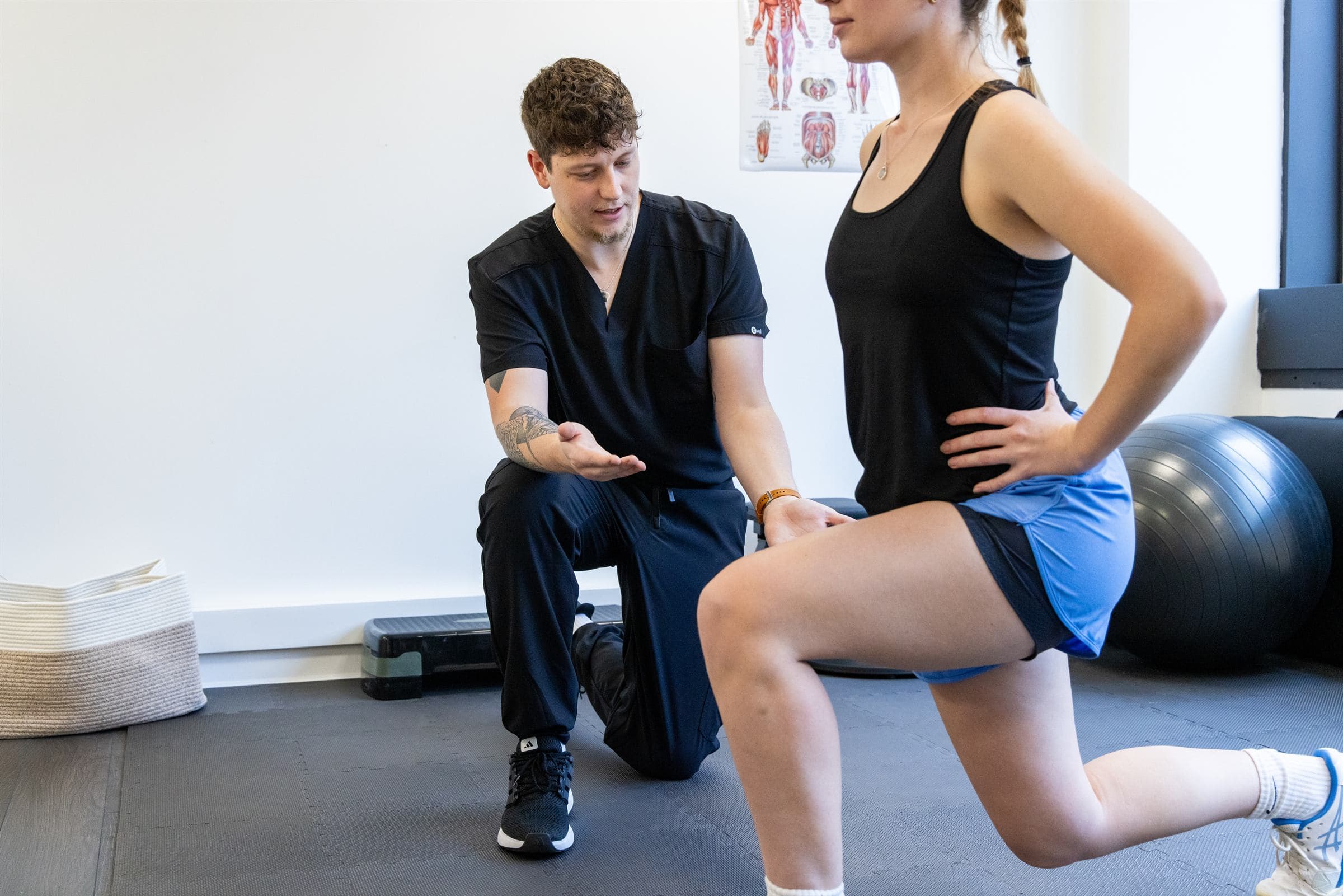
Physiotherapist checking a patient's lunge technique at Joint Initiative Physiotherapy in Norwich
Physio for runners

Running Injury Physio in Norwich

Most running injuries come on gradually, and the cause is more often a change in training than a single bad step. At Joint Initiative Physiotherapy on Rose Lane, chartered physiotherapist Matt Joslin assesses the injury, your training and how you move, then plans the route back to running. Whether you are building towards Run Norwich, a Saturday parkrun at Eaton Park or long miles on Marriott's Way, the aim is to keep you running where it is safe to.

£90
60 minute assessment
£55
Follow-up session
NR1
Rose Lane, Norwich

Running injuries, training load and rehab

Common running injuries we assess

Runners tend to pick up a recognisable set of problems, mostly in the lower leg and around the knee. Each one behaves differently and needs its own approach, which is why a general rest-and-stretch routine often falls short. Knee, Achilles and heel problems have their own pages on this site.

  • Shin pain along the inner edge of the shin bone, often called shin splints
  • Runner's knee, an ache around or behind the kneecap, typically on hills, stairs and after sitting
  • Iliotibial band (ITB) pain on the outer side of the knee that comes on at a predictable point in a run
  • Calf and hamstring strains, from a sudden pull during faster running to a tightness that builds over a few runs

Training load and movement analysis

Many running injuries trace back to doing too much, too soon: more miles, more speed, more hills or less recovery than the body was ready for. So the assessment covers your training diary as closely as the sore area. Matt also uses movement analysis to see how your hips, knees and ankles control load on one leg.

  • A review of weekly mileage, long runs, pace sessions, surfaces and rest days
  • Single-leg squat, step-down and hopping tests to compare sides
  • Strength checks for calves, quads, hamstrings and hip muscles
  • A look at how you move and at your trainers, so bring your running shoes

Rehab that builds back to events

Treatment combines adjusting your running so the injury can settle with strength work to raise what your legs can tolerate. Complete rest is only advised when it is needed, and Matt will say so if he suspects a bone stress injury or anything else that should be investigated through your GP. Hands-on treatment, sports massage or taping may be used to ease symptoms alongside the exercise plan.

  • Modified running, for example shorter, flatter or slower, or a temporary switch to cross-training
  • Progressive strength work for the calf, thigh and hip, matched to the injury
  • Hopping and plyometric drills before faster running is reintroduced
  • A staged build towards your target event, with realistic advice if the date is too close

Getting you back to running

  1. 1

    Injury and training review

    The 60 minute assessment covers the injury, your recent training, your goals and any event dates. Bring your trainers and, if you track your runs, your recent training log.

  2. 2

    Decide what running you can keep

    Matt sets clear rules for how much running, if any, is sensible right now and what to use in its place, so fitness is protected while the injury calms.

  3. 3

    Strengthen the weak link

    You work through a strength programme targeted at the injured area and anything the movement tests showed up, progressed at follow-up sessions.

  4. 4

    Structured return and event build

    Running is reintroduced in stages, typically starting with run-walk intervals on flat ground, then adding distance before speed and hills. The plan is shaped around parkrun, a 10K or whatever you are training for.

A physiotherapist who has worked at endurance events

  • Matt has treated athletes at ultra-marathons, experience that informs how he manages runners preparing for long events.
  • He is a chartered physiotherapist (MCSP), HCPC registered, with a background that includes on-field care in professional football.
  • The clinic is in Norwich city centre, close to the railway station and Riverside, and is open until 7pm on Tuesdays and Thursdays.

Treatment is delivered by an HCPC registered chartered physiotherapist. Meet Matt Joslin, BSc (Hons) MCSP.

Prices and where to find us

  • Initial Physiotherapy Assessment60 minutes£90
  • Follow-up Physiotherapy Session30 minutes£55

The Union Building, 51-59 Rose Lane, Norwich, NR1 1BY

Monday, Wednesday and Friday 9am to 5pm. Tuesday and Thursday 11am to 7pm.

See all prices and book

Common questions

Do I have to stop running completely while my running injury heals?

Not usually. Many running injuries can be managed with reduced or modified running, such as shorter distances, softer or flatter routes and an easier pace, combined with strength work. A complete break is advised for some problems, including suspected bone stress injuries and more significant muscle tears. Matt will tell you which applies after assessing you.

What causes shin splints in runners and can physio help?

Shin splints usually follow a rapid increase in running, especially on hard surfaces or in worn trainers. Physiotherapy may help by adjusting your training load, strengthening the calf and foot muscles and checking how you move. Pain focused on one small spot of bone, or pain at rest, needs medical assessment to rule out a stress fracture.

Will a running injury assessment include looking at how I run?

It includes movement analysis. Matt looks at how you walk, squat, balance and hop on each leg, which shows how well your hips, knees and ankles control impact, and he will ask in detail about your running. Bring your trainers and wear something you can move in. Findings feed directly into your strength and return-to-run plan.

Can you help me get back in time for Run Norwich or another race?

Often, depending on the injury and how many weeks you have. Matt will give you an honest view of whether your event is realistic, plan your rehab and running build-up around the date, and suggest adjusting your target if needed. Joint Initiative Physiotherapy is independent and has no affiliation with Run Norwich or other local events.

Book your appointment in Norwich city centre

Choose a time online, or call the clinic if you would like to talk it through first.