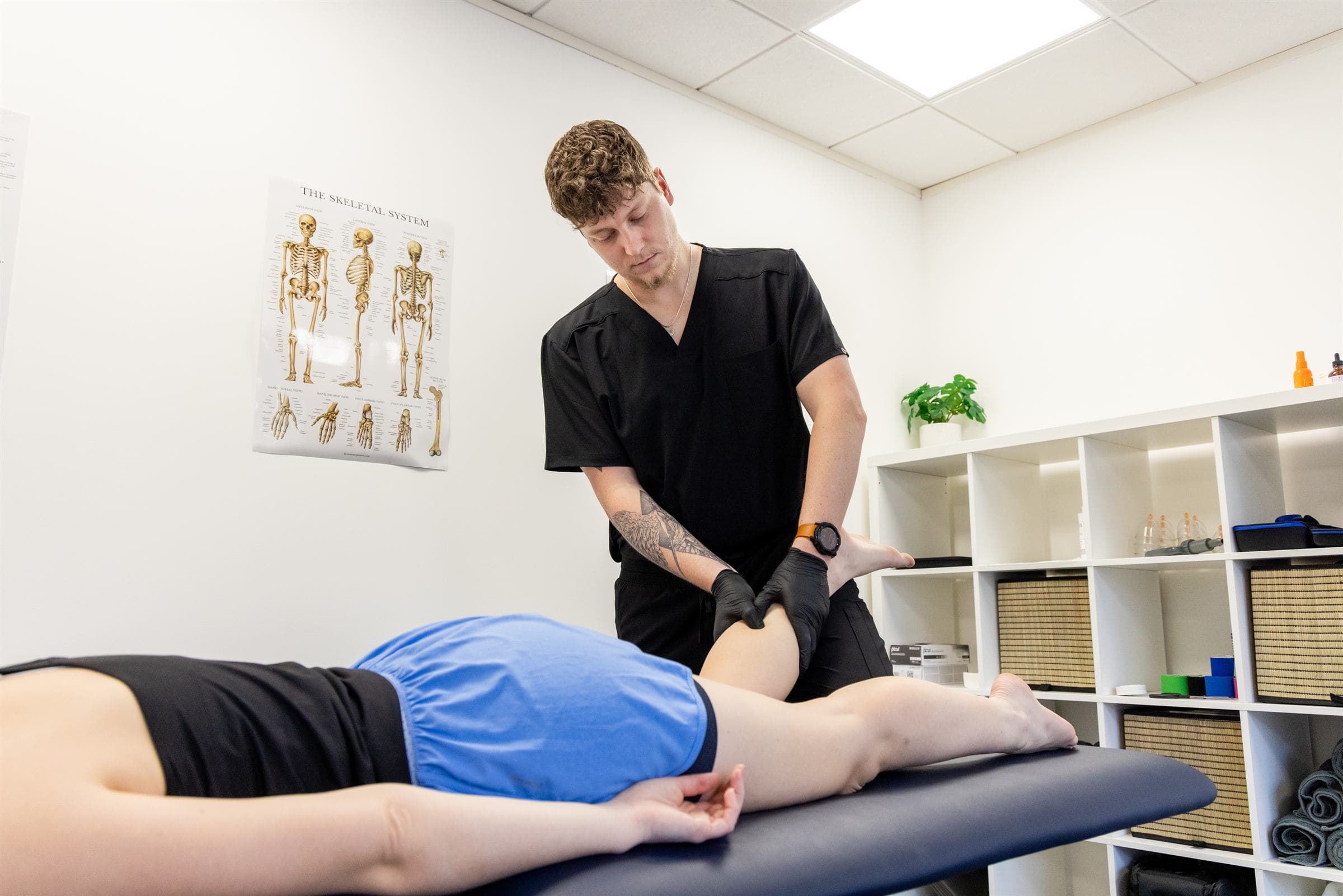
Sports massage treatment on a treatment couch at Joint Initiative Physiotherapy, Norwich
Massage guide

Sports Massage Benefits: What It Can and Cannot Do

The main benefits of sports massage are that it may reduce how sore and tight your muscles feel, and many people find it helps them relax and move more comfortably. The evidence that it improves performance or speeds up tissue healing is limited. This guide sets out what to expect, how often to book and when to check with a health professional first.

£50
30 minute massage
£70
60 minute massage
HCPC
Registered physiotherapist

What sports massage may help with, and its limits

What the benefits are likely to be

Research on massage after exercise points most consistently to how muscles feel, not to measurable changes in strength or speed. In practical terms that still matters. Feeling less sore and less stiff can make it easier to keep training, sleep well and stay active.

  • It may reduce the muscle soreness you notice in the day or two after hard or unfamiliar exercise.
  • It may ease the feeling of tightness, and some people notice a short-term improvement in how freely they move.
  • Many people find it relaxing, which can be useful during a heavy block of training or a demanding spell at work.
  • Regular sessions give you a chance to mention niggles early to a chartered physiotherapist.

What it is unlikely to do

Some popular claims about sports massage are not supported by good evidence, and it is better to know that before you book. Massage is a useful addition to sensible training, sleep and recovery. It is not a replacement for them, and it is not a treatment for an undiagnosed injury.

  • Evidence that massage improves sprint, strength or endurance performance is limited.
  • Evidence that it speeds up the healing of injured muscle, tendon or ligament is also limited.
  • It does not remove lactic acid. Your body clears lactate by itself soon after exercise.
  • It will not prevent injury without well-planned training, enough rest and gradual increases in load.

How often to have one

There is no fixed rule for how often to have a sports massage. It depends on how much you train, what you are training for, how your body responds and what fits your budget. The most reliable guide is whether you feel a worthwhile difference afterwards.

  • During heavy training, for example building up to Run Norwich or a marathon, some people book every few weeks.
  • Others book only when they need it, such as after an event or a spell of harder sessions.
  • If you train lightly or are booking for desk-related tightness, occasional sessions may be all you want.
  • If the same spot needs attention every time, a physiotherapy assessment is more useful than more massage.

What a sports massage session involves

  1. 1

    A few questions first

    Matt asks about your training, any event coming up, your general health and medication, and the areas you want worked on. This is also when you mention anything on the safety list below.

  2. 2

    Hands-on treatment

    You lie on a treatment couch with the area to be treated uncovered. Shorts are helpful for leg work. Sessions last 30 minutes for one or two areas or 60 minutes for more, and the pressure is adjusted to your feedback.

  3. 3

    The day or two afterwards

    It is common for treated muscles to feel tender, a little like the ache after a workout, for a day or two. Drink and eat as you normally would, and keep moving. Gentle activity is fine.

  4. 4

    Fitting it around training

    After a firm session, many people plan an easy day before their next hard run, match or gym session. If you have an event coming up, tell Matt the date so the session can be lighter if needed.

Why you can rely on this advice

  • This guide reflects the approach of Matt Joslin, BSc (Hons) Physiotherapy, MCSP, an HCPC registered chartered physiotherapist and the clinic's Head Physiotherapist and Director.
  • Matt has treated athletes at ultra-marathons and tennis tournaments and worked with a professional football team, so the advice comes from hands-on work with people who train hard.
  • Every massage at the clinic is carried out by a chartered physiotherapist, who will say so if your symptoms need assessing or a conversation with your GP.

Treatment is delivered by an HCPC registered chartered physiotherapist. Meet Matt Joslin, BSc (Hons) MCSP.

Prices and where to find us

  • Deep Tissue & Sports Massage30 minutes£50
  • Deep Tissue & Sports Massage60 minutes£70

The Union Building, 51-59 Rose Lane, Norwich, NR1 1BY

Monday, Wednesday and Friday 9am to 5pm. Tuesday and Thursday 11am to 7pm.

See all prices and book

Common questions

What does a sports massage actually do to your muscles?

It applies pressure and movement to muscles and the soft tissue around them. How this produces its effects is not fully understood, but much of the benefit seems to come from changes in how the area feels, with less soreness and less sense of tightness for a while afterwards. It does not flush out toxins or lactic acid.

How often should you have a sports massage when training for a 10K or marathon?

There is no set frequency. Some runners book every few weeks during their heaviest training, others only after long runs or the event itself. Base it on your training load, how your legs feel and whether you notice a benefit. Most people avoid a firm session in the last few days before race day.

Is it normal to feel sore the day after a sports massage?

Yes, mild tenderness for a day or two is common, especially after firm pressure or if it is your first session. It should feel like post-exercise ache and settle without treatment. If you have sharp pain, marked swelling or symptoms that keep getting worse, contact the clinic or speak to your GP or NHS 111.

What does a sports massage cost, and is 30 or 60 minutes better?

At Joint Initiative Physiotherapy a 30 minute Deep Tissue & Sports Massage costs £50 and a 60 minute session costs £70. Thirty minutes usually suits one or two areas, such as calves and hamstrings. Sixty minutes gives time for several areas, for example both legs and the lower back. Please give 24 hours' notice to cancel or reschedule.

Book your appointment in Norwich city centre

Choose a time online, or call the clinic if you would like to talk it through first.