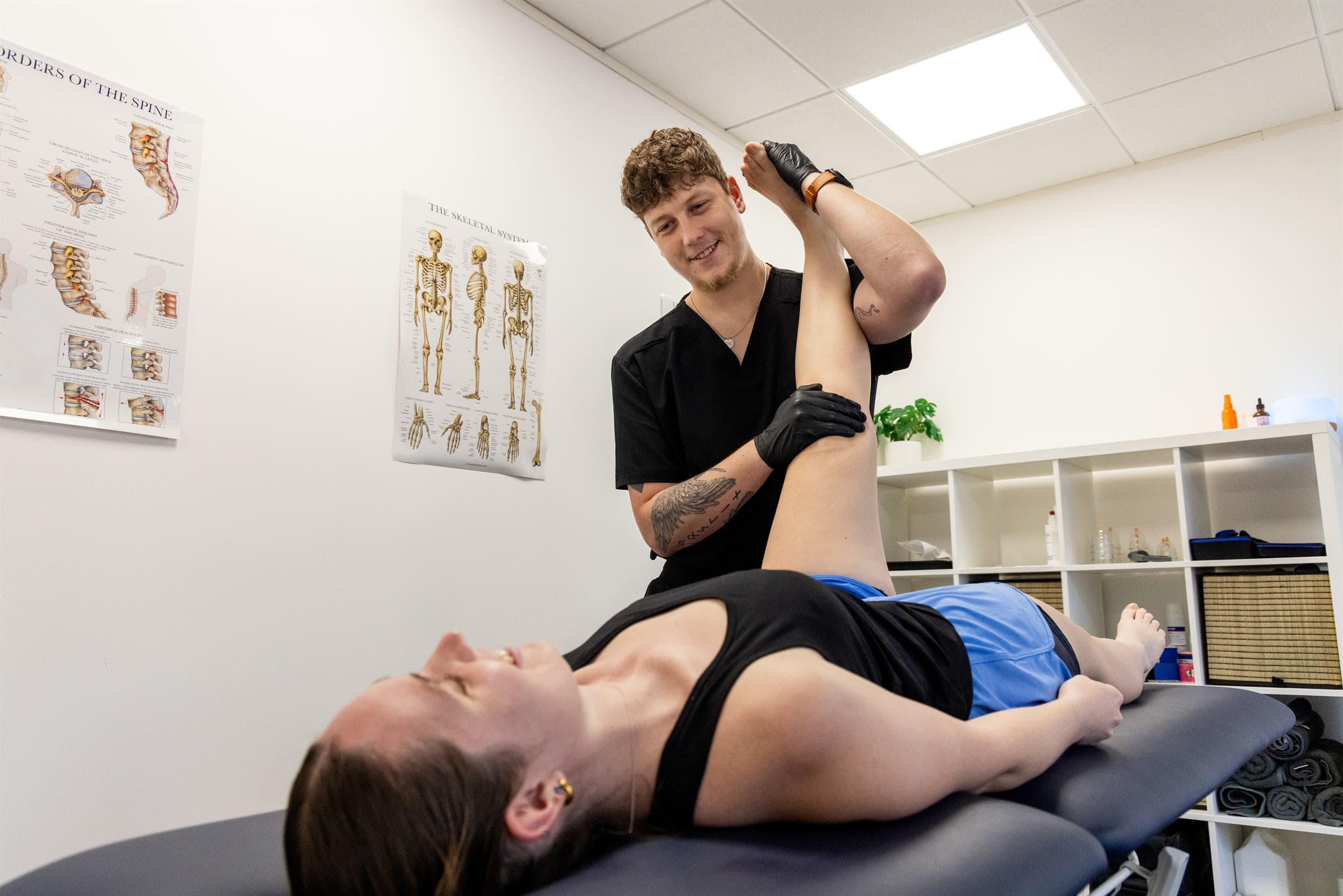
Physiotherapist moving a patient's leg on a treatment couch at Joint Initiative Physiotherapy, Norwich
Rehabilitation after surgery

Post-Operative Physiotherapy in Norwich

Surgery repairs or replaces the structure. Rehabilitation is what restores the movement, strength and confidence to use it. Post-operative physiotherapy at Joint Initiative works alongside your surgeon's protocol, giving you one-to-one guidance through each stage of recovery from a chartered physiotherapist with a background in orthopaedics.

HCPC
Registered physiotherapist
1:1
One-to-one appointments
Lift
Access to the clinic

Rehabilitation after your operation

Operations we provide rehabilitation for

Rehabilitation differs a great deal from one operation to the next, and from one surgeon to the next. A knee replacement, a ligament reconstruction and a fixed fracture each have their own priorities and precautions in the early weeks. Your programme is built around the procedure you had and the instructions you were given on discharge.

  • Hip and knee replacement, including partial knee replacement
  • ACL reconstruction and other ligament reconstruction or repair
  • Shoulder surgery, such as rotator cuff repair or stabilisation
  • Fracture fixation, once your surgical team has cleared you to start

Working alongside your surgeon's protocol

Your surgeon sets the rules for your recovery: how much weight you can put through the limb, how far a joint may move, and when a brace or sling comes off. Matt works within those instructions and will never ask you to go beyond them. If your protocol is unclear, or something does not look as expected, he will advise you to contact your surgical team.

  • Weight-bearing, range and brace restrictions are followed as written
  • Exercises are progressed only when your protocol and your body allow
  • Concerns about a wound, swelling or pain are referred back to your surgeon or GP
  • Questions about driving or returning to work are directed to your surgical team

What rehabilitation sessions involve

Early sessions usually focus on settling swelling, regaining movement and getting the muscles around the joint working again. Later sessions build strength, balance and walking pattern, then the specific tasks you want back, from stairs and gardening to running and sport. Recovery time varies widely with the operation and the person, and can take several months.

  • Manual therapy and soft tissue work where your protocol permits
  • A personalised exercise programme reviewed at each session
  • Movement analysis of walking, stairs, squatting or reaching
  • Clear home exercises, so progress continues between appointments

Your rehabilitation, stage by stage

  1. 1

    Share your surgical details

    Bring your discharge letter, surgeon's protocol and any hospital exercise sheet. We note your operation date, restrictions and next review appointment.

  2. 2

    Baseline assessment

    Matt checks movement, swelling, strength and how you are walking or using the limb, within your restrictions, and treatment starts in the same session.

  3. 3

    Progress within the protocol

    Follow-up sessions advance your exercises as each milestone is reached, and are spaced to suit the stage of recovery you are at.

  4. 4

    Return to what matters

    Later rehabilitation targets your own goals, whether that is walking the Broads, getting back to work or returning to sport, with a plan to keep the gains.

Experienced, careful post-surgical care

  • Matt Joslin has worked across public and private healthcare, including orthopaedics, so he is familiar with how surgical rehabilitation is staged.
  • For ACL and other sporting operations, his experience delivering rehabilitation for a professional football team informs the later, return-to-sport stages.
  • The Union Building on Rose Lane has lift access and parking on site, which matters when you are on crutches or early in your recovery.

Treatment is delivered by an HCPC registered chartered physiotherapist. Meet Matt Joslin, BSc (Hons) MCSP.

Prices and where to find us

  • Initial Physiotherapy Assessment60 minutes£90
  • Follow-up Physiotherapy Session30 minutes£55

The Union Building, 51-59 Rose Lane, Norwich, NR1 1BY

Monday, Wednesday and Friday 9am to 5pm. Tuesday and Thursday 11am to 7pm.

See all prices and book

Common questions

When should I start physiotherapy after an operation?

It depends on the operation and your surgeon's instructions. Some procedures call for movement within days, others need a period of protection first. Follow the timing in your discharge information, and ask your surgical team if it is not stated. Once you are cleared to begin, you can book directly online without a GP referral.

Will you follow the rehabilitation protocol my surgeon gave me?

Yes. Your surgeon's protocol takes priority, and your programme is planned around it. Matt will not progress weight-bearing, range of movement or loading beyond what your surgeon has allowed. If you were not given a written protocol, bring whatever discharge paperwork you have and ask your surgical team to confirm any restrictions before your first session.

What should I bring to my first physio appointment after surgery?

Bring your discharge paperwork, any rehabilitation protocol from your surgeon, and scan or X-ray results if you have them. Wear comfortable clothing that allows access to the area that was operated on. After hip, knee, ankle or foot surgery, bring the shoes you normally walk in, along with any brace, sling or walking aid you have been given.

Can I have private rehabilitation alongside my hospital physiotherapy?

That is your choice, and some people do add private sessions to the physiotherapy arranged by their hospital. If you do, tell both physiotherapists so that your exercises are consistent and you are not given conflicting advice, and bring any exercise sheets from the hospital to your appointment.

Book your appointment in Norwich city centre

Choose a time online, or call the clinic if you would like to talk it through first.