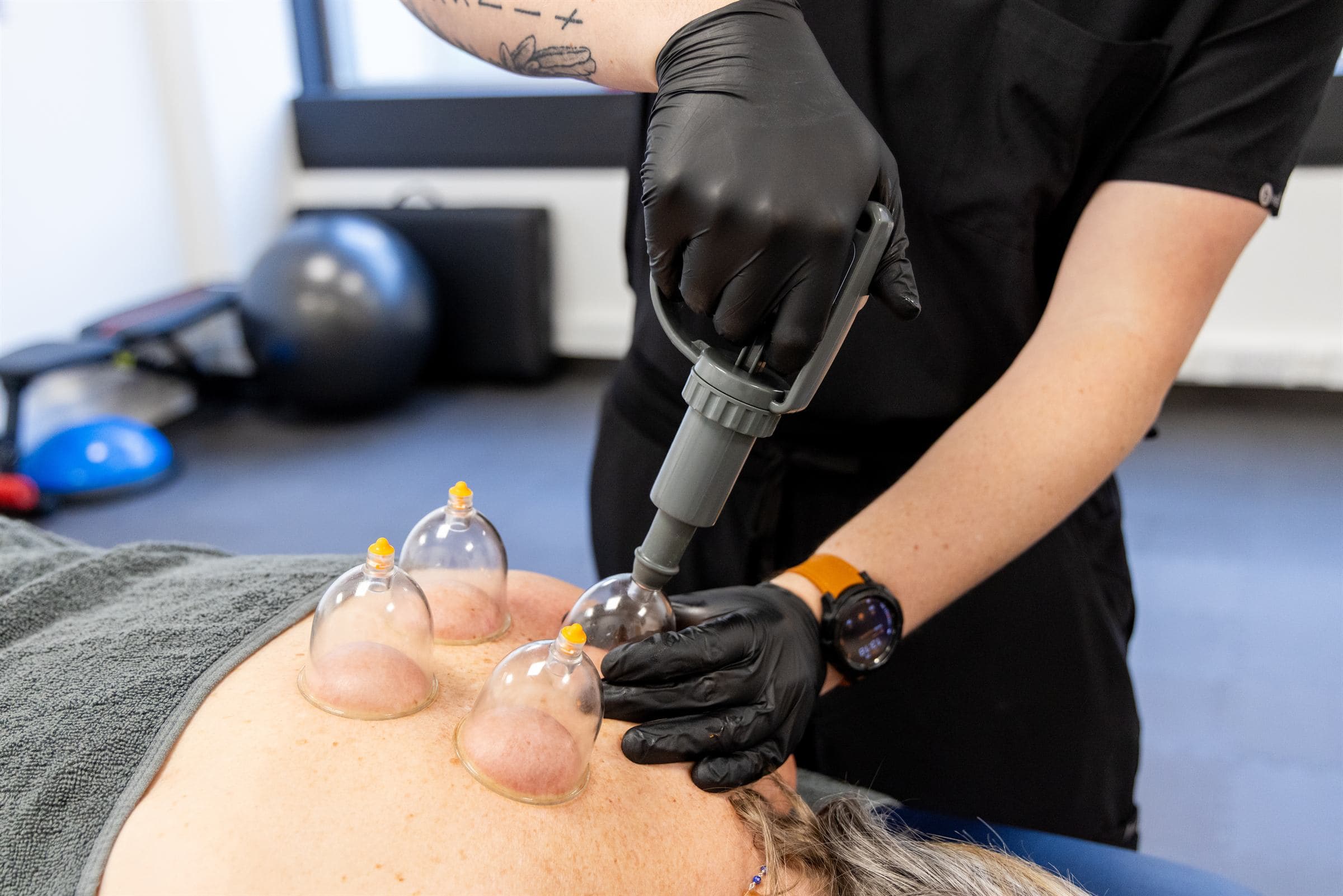
Cupping being applied during a hands-on treatment session at Joint Initiative Physiotherapy in Norwich
Massage guide

Deep Tissue vs Sports Massage: Which One Do You Need?

The short answer is that they are more alike than different. Both use firm, hands-on soft tissue techniques. Deep tissue massage leans towards slow, sustained pressure on areas that feel tight, while sports massage is shaped around your training and the muscles your activity loads. At Joint Initiative Physiotherapy you book one Deep Tissue & Sports Massage appointment and the session is tailored to you.

30 or 60 min
Session lengths
£50 / £70
Massage prices
1 booking
Covers both styles

Deep tissue and sports massage compared

Where the two overlap

There is no strict clinical line between a deep tissue massage and a sports massage. The names describe an emphasis, not two separate sets of techniques, and a therapist will often move between them in one session. That is why the clinic lists them as a single appointment instead of asking you to guess the right label.

  • Both use hands-on pressure, stroking and kneading of muscles and the soft tissue around them.
  • Both can be firm, and both should stay within a level of pressure you are comfortable with.
  • Both are used for muscles that feel tight, heavy or sore after work, training or long periods sitting.
  • Neither is a substitute for an assessment when pain has no obvious cause.

How the emphasis differs

The differences are about why you have come in and how the time is used. Think of four things: the goal, the pressure, the pacing and the timing around your training. Tell Matt which of these matters most to you and the session is built around it.

  • Goal: deep tissue work usually targets a specific area that feels tight, such as the neck, shoulders or lower back. Sports massage targets the muscle groups your sport or training uses most.
  • Pressure: deep tissue work tends to be firmer and more sustained on one area. Sports massage varies the pressure more, from lighter and brisker to firm.
  • Pacing: deep tissue work is slow and stays in one place for longer. Sports massage often covers more ground.
  • Timing: sports massage is planned around your training week. Many people keep firmer work away from the days just before a race or match and choose a lighter session instead.

When physiotherapy is the better first appointment

Massage works on how muscles feel. It does not tell you why something hurts. If you are asking whether you need physio or sports massage, the deciding question is whether there is a problem that needs assessing. If there is, an Initial Physiotherapy Assessment is the better place to start, and massage can form part of the plan afterwards if it is useful.

  • Pain that came on without a clear reason, or that you cannot explain.
  • A recent injury, such as a strain, sprain, fall or sudden pain during sport.
  • Pain that has lasted several weeks, keeps returning or is getting worse.
  • Pain with pins and needles, numbness, weakness, a joint giving way or disturbed sleep.

How to choose the right appointment

  1. 1

    Start with your reason for booking

    If your muscles feel generally tight, tired or sore and you know why, massage is a reasonable choice. If you have pain you cannot explain, an injury or symptoms that have lasted weeks, book a physiotherapy assessment first.

  2. 2

    Choose 30 or 60 minutes

    A 30 minute Deep Tissue & Sports Massage is £50 and suits one or two areas, such as calves or neck and shoulders. A 60 minute session is £70 and allows time for several areas or a more thorough treatment.

  3. 3

    Say what you want from the session

    At the start, tell Matt about your work, your training, any event coming up and how firm you like the pressure. That decides whether the session leans towards slow, focused deep tissue work or broader sports massage.

  4. 4

    Change course if something needs a closer look

    If Matt finds something during the massage that would be better assessed, he will tell you and explain why. You can then book an Initial Physiotherapy Assessment, which is 60 minutes and £90.

Why this comparison comes from a qualified source

  • Massage at the clinic is delivered by a chartered physiotherapist, so the person treating you is trained to recognise when a tight muscle needs assessing instead of massaging.
  • Matt Joslin, BSc (Hons) Physiotherapy, MCSP, is HCPC registered and has provided on-field care and rehabilitation for a professional football team and treated athletes at ultra-marathons and tennis tournaments.
  • The same clinic offers both massage and physiotherapy, so the advice on which to book is based on what suits your problem, not on the only service available.

Treatment is delivered by an HCPC registered chartered physiotherapist. Meet Matt Joslin, BSc (Hons) MCSP.

Prices and where to find us

  • Deep Tissue & Sports Massage30 minutes£50
  • Deep Tissue & Sports Massage60 minutes£70

The Union Building, 51-59 Rose Lane, Norwich, NR1 1BY

Monday, Wednesday and Friday 9am to 5pm. Tuesday and Thursday 11am to 7pm.

See all prices and book

Common questions

Is deep tissue massage more painful than sports massage?

Not necessarily. Deep tissue massage usually involves slower, more sustained pressure, so it can feel more intense on a tight area, but neither style should be something you have to grit your teeth through. Pressure is adjusted to what you are comfortable with, and you can ask for it to be eased at any point in the session.

Should I book physio or sports massage for a pulled muscle?

Book physiotherapy first. A pulled or strained muscle is an injury, and it is worth having it assessed so you know how significant it is and how to load it as it recovers. Firm massage over a fresh strain is usually avoided in the first few days. Massage may be added later if it suits your recovery.

Do I have to play sport to choose the sports massage option?

No. You do not need to be an athlete or train regularly. Massage can suit anyone with tight shoulders, backs or legs, whether that comes from a desk job, physical work or everyday life. Because the clinic offers one combined Deep Tissue & Sports Massage appointment, you do not have to pick a label. You explain what you need and the session is tailored to that.

Which is better before a race, deep tissue or sports massage?

A lighter, sports-style massage is the usual choice close to an event. Firm deep tissue work can leave muscles feeling tender for a day or two, so many runners and players keep it for earlier in their build-up or for after the event. Tell Matt your race or match date when you book in.

Book your appointment in Norwich city centre

Choose a time online, or call the clinic if you would like to talk it through first.