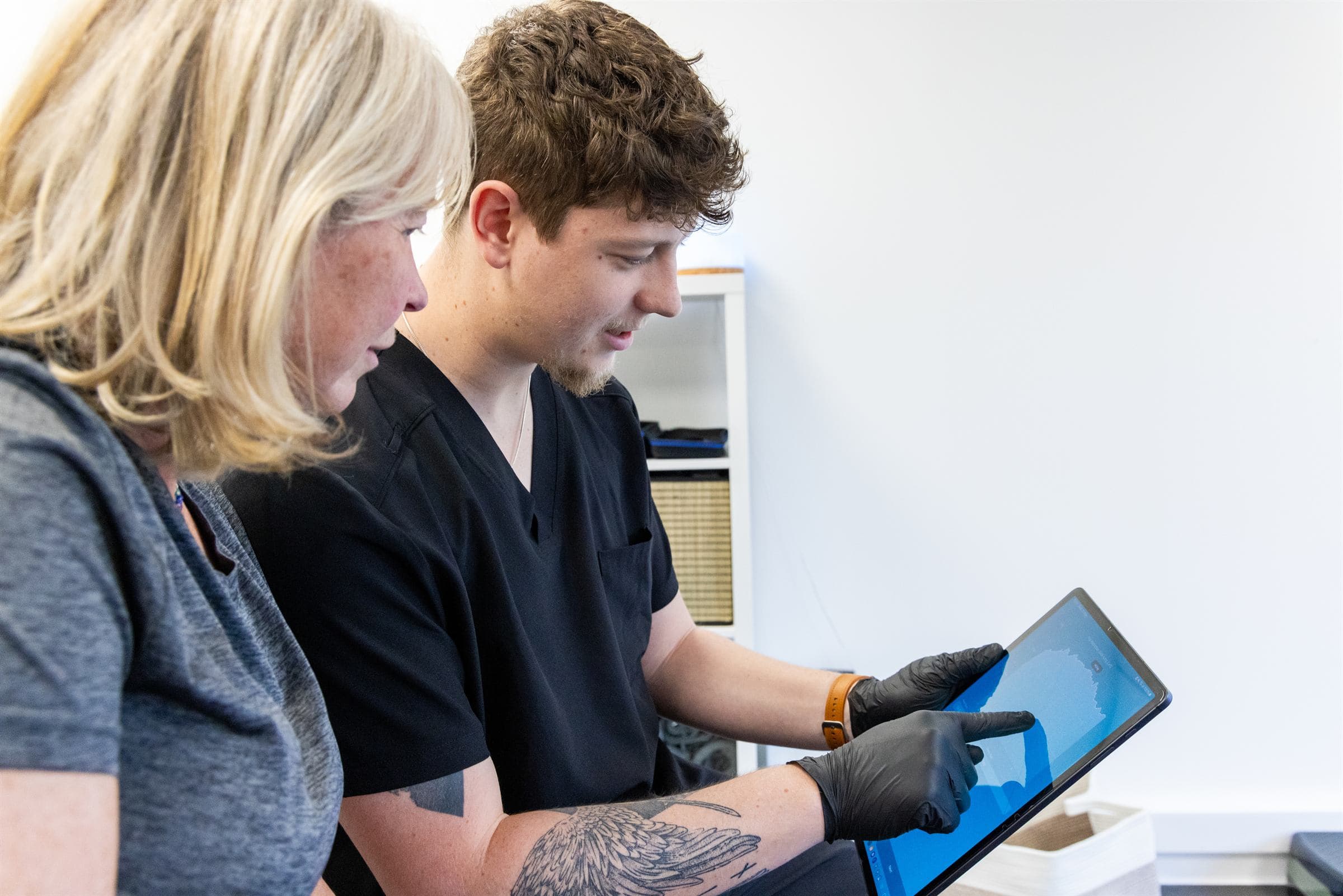
Physiotherapist showing a patient their results on a tablet at Joint Initiative Physiotherapy, Norwich
Neck and upper back

Physio for Neck Pain in Norwich

A stiff or painful neck affects how you drive, sleep, concentrate and look over your shoulder. Matt Joslin, chartered physiotherapist at Joint Initiative Physiotherapy in Norwich city centre, works out whether the joints, muscles or nerves of your neck are involved and sets out a clear plan to restore comfortable movement.

7pm
Late appointments Tue and Thu
30 min
Follow-up sessions
MCSP
Chartered physiotherapist

Why necks become painful and what can be done

Common types of neck pain

The neck carries the weight of your head all day and gives the nerves to your arms their exit route, so problems here can show up in several ways. Most neck pain is mechanical, meaning it relates to how the joints and muscles are being loaded, and it usually improves with movement and time.

  • Stiffness and aching after long hours at a screen, driving or looking down at a phone, where one posture is held for too long
  • Whiplash after a road traffic collision or a sporting impact, where the neck is moved suddenly beyond its usual range
  • Nerve-related arm pain, with pins and needles, numbness or a deep ache running to the shoulder blade, arm or fingers
  • Headaches that begin at the base of the skull and spread forwards, often on one side and linked to neck movement or position

What a neck assessment looks at

Matt begins with questions about your work setup, sleep, previous injuries and any headaches or arm symptoms. The physical examination then compares how your neck moves with how it should, and tests the nerves that supply your arms and hands.

  • Measuring how far you can turn, tilt and look up and down, and noting which directions are restricted or painful
  • Gently tilting the head towards the sore side to see whether it brings on your arm symptoms, a sign that a nerve root is irritated
  • Checking grip and arm strength, reflexes at the elbow and wrist, and light touch in the fingers
  • Feeling the joints and muscles of the neck and upper back, and watching how the shoulder blades move

Treatment for neck pain and its limits

Treatment combines hands-on work to ease movement with exercises that build endurance in the deep muscles supporting your neck. Advice about your desk and daily habits is specific to what you actually do, since no single posture is right for everyone.

  • Joint mobilisation and soft tissue work to the neck and upper back, used to reduce stiffness and muscle tension
  • Range of movement and strengthening exercises for the neck and shoulder blade muscles that take a few minutes a day
  • Workstation, driving and pillow advice, with an emphasis on changing position regularly instead of sitting rigidly upright
  • Not suitable as a first step after a significant accident or with the urgent symptoms listed on this page, which need medical assessment first

How a stiff neck is assessed and treated

  1. 1

    Map your symptoms

    You describe where the pain sits, whether it reaches your head, shoulder blade or arm, and which parts of your day make it worse, from the commute to the pillow.

  2. 2

    Test movement and arm nerves

    Neck rotation, tilt and nerve function in the arms are examined so that muscle and joint stiffness can be told apart from an irritated nerve.

  3. 3

    Free up the neck

    Hands-on treatment in the first session aims to ease movement, and you are shown two or three exercises to repeat at home or at your desk.

  4. 4

    Change what keeps it coming back

    Later sessions add strength work for the neck and shoulders and adjust your screen, seat or training routine so the problem is less likely to return.

Neck care from a chartered physiotherapist

  • Every neck assessment is carried out by Matt Joslin, an HCPC registered physiotherapist and member of the Chartered Society of Physiotherapy.
  • Late appointments until 7pm on Tuesdays and Thursdays suit people who work in the city centre and cannot leave their desk during the day.
  • You can book directly online without waiting for a GP referral, and Matt will refer you back to your GP if he finds something that needs it.

Treatment is delivered by an HCPC registered chartered physiotherapist. Meet Matt Joslin, BSc (Hons) MCSP.

Prices and where to find us

  • Initial Physiotherapy Assessment60 minutes£90
  • Follow-up Physiotherapy Session30 minutes£55

The Union Building, 51-59 Rose Lane, Norwich, NR1 1BY

Monday, Wednesday and Friday 9am to 5pm. Tuesday and Thursday 11am to 7pm.

See all prices and book

Common questions

Can physiotherapy help headaches that start in my neck?

It may, if the headache is coming from the neck. These headaches usually begin at the base of the skull, sit on one side and change with neck movement or sustained postures. Matt will assess whether your neck reproduces the headache. Hands-on treatment and specific exercises are commonly used. Other headache types need a GP assessment instead.

Is my desk setup causing my neck pain?

It can contribute, though the bigger issue is usually staying in one position for hours without a break. A screen that is too low or a laptop used on its own often adds to the strain. Matt will ask about your workstation and suggest simple changes, along with short movement breaks and exercises to do during the working day.

What does physio involve after whiplash?

Physio after whiplash focuses on restoring normal neck movement early and keeping you active. Collars and long periods of rest are generally not recommended. Treatment usually includes gentle range of movement exercises, advice on pain relief and activity, and gradual strengthening. If you have not been medically checked since the accident, do that before booking.

Why does my neck pain cause pins and needles in my arm?

Pins and needles in the arm usually mean a nerve in the neck is irritated or compressed where it leaves the spine. The tingling follows the path of that nerve, sometimes into particular fingers. Many cases settle over weeks to months. Matt tests your strength, reflexes and sensation and will refer you to your GP if weakness is progressing.

Book your appointment in Norwich city centre

Choose a time online, or call the clinic if you would like to talk it through first.