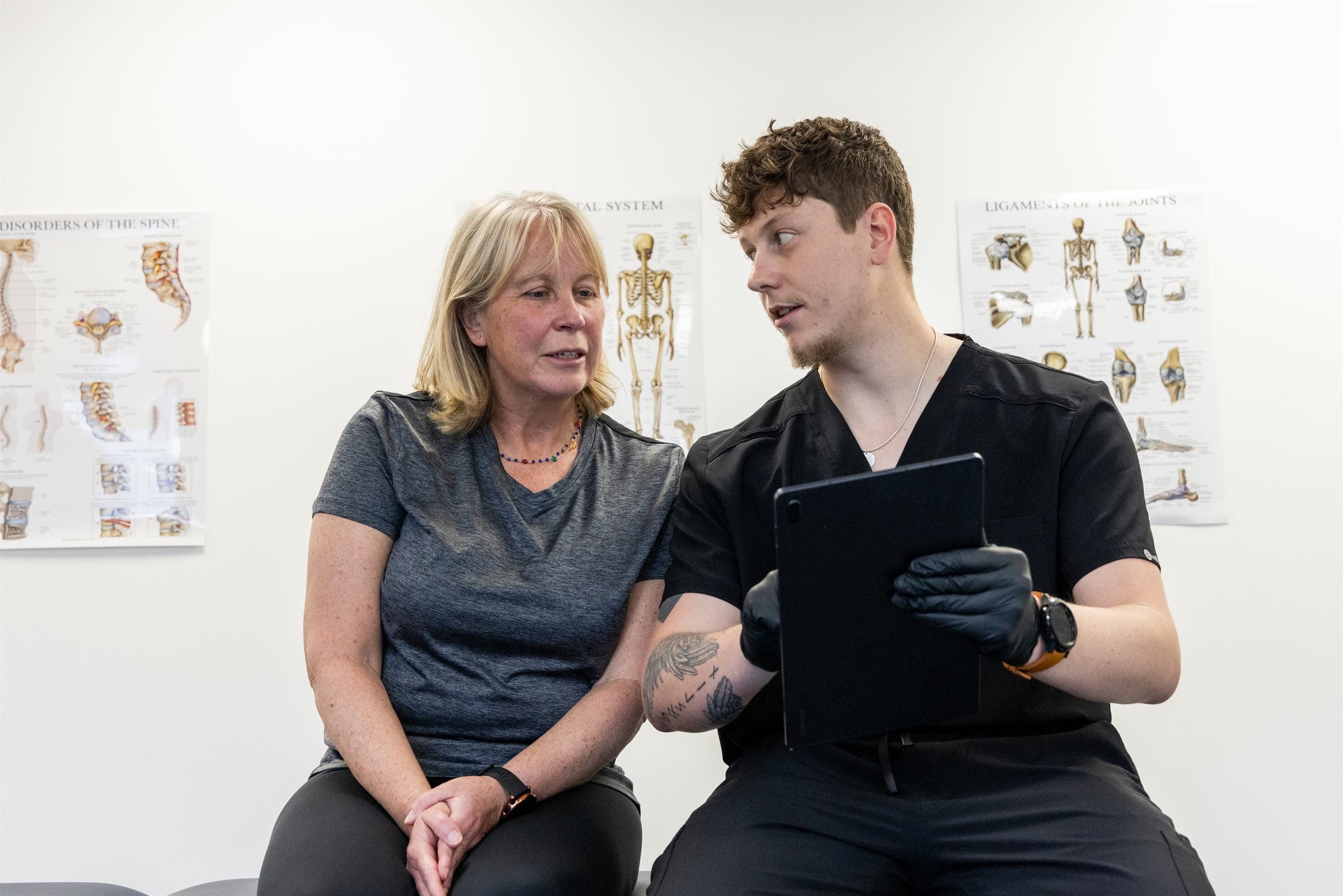
Physiotherapist talking through assessment findings with a patient at Joint Initiative Physiotherapy in Norwich
Back and leg pain

Back Pain & Sciatica Physiotherapy in Norwich

Lower back pain and sciatica can make sitting, sleeping and working miserable, yet most cases respond well to the right movement and advice. At Joint Initiative Physiotherapy on Rose Lane, chartered physiotherapist Matt Joslin examines your spine, hips and nerves, explains what he finds in plain English and gives you a plan you can start the same day.

60 min
Initial assessment
£90
Initial assessment fee
HCPC
Registered physiotherapist

Understanding lower back pain and sciatica

What back pain and sciatica actually are

Most lower back pain is called non-specific, which means it comes from the joints, discs, muscles and ligaments of the spine rather than from serious damage. Sciatica is different. It is leg pain caused by an irritated nerve root in the lower back, usually felt in the buttock and down the leg, often below the knee.

  • A dull ache or stiffness across the lower back, often worse after long spells of sitting or first thing in the morning
  • Sharp, burning or electric pain travelling down one leg, sometimes with tingling or numbness in the foot
  • Flare-ups after lifting, gardening, a long drive or a sudden jump in activity
  • Pain that eases once you get moving and returns when you stay in one position for too long

How your back is assessed

Scans are not routinely needed for back pain, and a careful history and physical examination usually give enough information to plan treatment. Matt checks how your spine moves and whether the nerves to your legs are working normally. If anything suggests further investigation is needed, he will refer you back to your GP.

  • Watching you bend forwards, backwards and to each side to see which directions bring on or ease your pain
  • A straight leg raise, where your leg is lifted while you lie on your back to see how sensitive the sciatic nerve is
  • Testing knee and ankle reflexes, skin sensation and the strength of your foot and big toe
  • Checking hip movement and how you sit, stand and lift, as these change the load on your back

Treatment, and when physio is not the first step

UK guidance for back pain and sciatica favours staying active, exercise and good self-management, with hands-on treatment used alongside exercise rather than instead of it. Your plan is built around what you need your back to do, whether that is a desk job, manual work or sport.

  • A personalised exercise programme, starting with movements that settle your symptoms and building towards strength
  • Manual therapy such as joint mobilisation and soft tissue work, which may help ease pain and stiffness in the short term
  • Practical advice on pacing, sitting, lifting, sleeping positions and staying at or returning to work
  • Physio is not the right starting point if you have any of the emergency symptoms listed on this page, or back pain after a serious fall or accident

From first flare-up to lifting with confidence

  1. 1

    Tell the story of your back

    Matt asks when the pain started, where it travels, what your working day involves and what worries you about it. Bring any scan results or medical notes you already have.

  2. 2

    Movement and nerve checks

    Your spinal movement, leg strength, reflexes and sensation are tested so the plan matches what is found, and anything that needs a GP opinion is picked up early.

  3. 3

    Settle the flare-up

    You leave with a short list of positions and movements that ease your symptoms, plus clear advice on what to keep doing and what to scale back for now.

  4. 4

    Build a stronger back

    Follow-up sessions progress your exercises towards bending, lifting and carrying, so you are prepared for work, the garden or the gym rather than avoiding them.

Why people with back pain choose Joint Initiative

  • Your back is assessed and treated by Matt Joslin, BSc (Hons) Physiotherapy, MCSP, an HCPC registered chartered physiotherapist.
  • The first appointment lasts a full 60 minutes, so there is time for a proper history, nerve checks, initial treatment and a tailored rehab plan.
  • The clinic is on Rose Lane in Norwich city centre, close to the railway station, with lift access and parking on site.

Treatment is delivered by an HCPC registered chartered physiotherapist. Meet Matt Joslin, BSc (Hons) MCSP.

Prices and where to find us

  • Initial Physiotherapy Assessment60 minutes£90
  • Follow-up Physiotherapy Session30 minutes£55

The Union Building, 51-59 Rose Lane, Norwich, NR1 1BY

Monday, Wednesday and Friday 9am to 5pm. Tuesday and Thursday 11am to 7pm.

See all prices and book

Common questions

Should I rest or keep moving with lower back pain?

Keep moving, within what you can tolerate. Long periods of bed rest tend to slow recovery from lower back pain, while gentle walking and normal daily activity usually help. You may need to change how much you do for a short while. Matt will show you which movements are useful for your back and which to ease off temporarily.

How long does sciatica usually take to settle?

It varies, but many people find sciatica eases over several weeks, and NHS guidance suggests it often improves in four to six weeks. Some cases last longer. Physiotherapy aims to keep you active, manage the leg pain and rebuild strength. If your symptoms are not following the expected pattern, Matt will advise you to see your GP.

Do I need an MRI scan before seeing a physio for back pain?

No, most people with back pain do not need a scan before starting physiotherapy. Scan findings often do not match how much pain someone has, so UK guidance reserves imaging for cases where it would change the treatment. If your assessment suggests a scan could be worthwhile, Matt will explain why and refer you back to your GP.

Can physiotherapy help with a slipped disc in my back?

Yes, physiotherapy is commonly used for disc-related back and leg pain. A so-called slipped disc has not actually slipped, it has bulged and may irritate a nearby nerve. Many disc bulges settle with time, movement and graded exercise. Matt monitors your leg strength and sensation at each visit and will advise a medical review if they are not improving.

Book your appointment in Norwich city centre

Choose a time online, or call the clinic if you would like to talk it through first.